Blog

  • Side Jobs for Home Health Aides on Weekends: 15 Options

    Side Jobs for Home Health Aides on Weekends: 15 Options

    Home health aides bring patience, safety awareness, communication skills, and hands-on care experience to every shift. Those abilities can also create weekend income. When I compare side jobs for home health aides on weekends, I consider pay, travel, physical strain, scheduling freedom, and legal limits—not just the advertised hourly rate.

    The best choice depends on whether you want more direct-care work or a lower-stress role that uses your transferable skills. Home health work can already be physically and emotionally demanding, so the right second job should fit your energy as well as your financial goals. he Highest-Paying Weekend Jobs for HHAs?

    What Are the Highest-Paying Weekend Jobs for HHAs? 

    1. Private Duty Weekend Caregiver

    Families may hire caregivers directly for companionship, personal care, meal preparation, mobility support, and reminders. Without an agency intermediary, you may have more control over your rate, but you also handle scheduling, screening, taxes, and liability. Care.com can help you locate private caregiving opportunities. I recommend using a written agreement covering duties, hours, cancellations, and payment.

    2. Weekend Respite Care Specialist

    Respite care gives a family caregiver temporary relief. Saturday or Sunday shifts may include supervision, companionship, light housekeeping, meal preparation, and help with daily routines. Federal aging programs recognize respite care as an important support for family caregivers, including care delivered at home or through adult day services.

    3. Hospice or End-of-Life Comfort Aide

    Hospice agencies may need weekend aides to provide comfort-focused personal care and emotional support under an approved care plan. I would only pursue this role through a legitimate employer offering appropriate training, supervision, and clearly defined responsibilities. Medicare hospice services can include both hospice aide and homemaker support.

    4. Extra Agency Shifts

    Extra Agency Shifts

    Your current agency may need evening, overnight, holiday, or weekend coverage. Extra shifts are often the fastest option because you already understand the employer’s procedures, client expectations, and documentation requirements.

    Before accepting, ask whether overtime applies and confirm that the extra schedule will not interfere with your regular clients.

    5. Patient Sitter

    Hospitals, rehabilitation centers, assisted living facilities, and families may hire patient sitters. The role usually centers on observation, companionship, and alerting clinical staff when help is needed.

    This option may appeal to aides who prefer one structured shift instead of driving between several private homes.

    Which Lower-Stress Side Hustles Use Caregiving Skills?

    6. Special-Needs Babysitter or Nanny

    Families seek caregivers for children with physical, developmental, or medical needs. An HHA’s calm approach and safety awareness can help, but adult-care experience does not qualify you for every case.

    Sittercity lists special-needs care jobs that can be filtered by location and schedule. Families may request CPR training, references, background checks, or experience with a particular condition. Companion and Companion Driver

    Independent seniors may need help with errands, grocery trips, appointments, or social activities. Papa connects approved workers with members needing companionship, everyday assistance, and transportation.

    Papa describes these visits as nonmedical and specifically states that workers do not administer medication or provide hands-on personal care. That distinction may give HHAs a welcome break from their regular duties. Day Care Assistant

    Adult day service centers run organized community programs for older adults and people who need daytime support. Weekend assistants may help with activities, meals, mobility, socialization, and general supervision.

    I would check local senior centers, nonprofit organizations, Area Agencies on Aging, and community service providers. The Administration for Community Living describes adult day services as coordinated programs delivered in group settings. d Meal Preparation

    Prepare simple meals for older adults or busy families who want food ready for the week. Your experience following client preferences and written dietary instructions can be useful.

    However, never market yourself as a dietitian or create medical nutrition plans unless you hold the appropriate professional qualification.

    10. Errand and Light Housekeeping Services

    Shopping, changing linens, organizing rooms, laundry, and light cleaning can become a simple weekend service. These tasks may suit older clients who do not need personal care but still want dependable household support.

    Define boundaries in writing so the assignment does not expand into heavy cleaning, furniture moving, or unsafe lifting.

    How Can HHAs Find Flexible App-Based Weekend Work?

    How Can HHAs Find Flexible App-Based Weekend Work?

    11. PRN Healthcare Staffing Platforms

    ShiftKey lets eligible healthcare professionals search for PRN facility shifts. Some HHAs may need an additional credential, such as CNA certification, and availability varies by state, facility, and professional qualification. orks differently. 

    It helps families connect with home-care agencies rather than operating as a single-shift staffing app. It may still help you identify local agencies that are hiring weekend caregivers. mergency Medical Transportation

    Non-emergency medical transportation helps eligible passengers reach medical services when emergency transportation is unnecessary. Local NEMT companies may require a clean driving record, a reliable or approved vehicle, background screening, insurance, and specific training.

    HHA experience can help with patient communication and passenger support, but drivers must follow company procedures and state requirements. Medicaid defines NEMT as transportation that helps eligible beneficiaries access medical care when other transportation is unavailable. nd Jobs Give HHAs a Break From Caregiving?

    13. Pet Sitting or House Sitting

    Pet sitting, dog walking, and house sitting provide flexible income outside healthcare. Meet pets before accepting an assignment, confirm medication instructions, and document emergency contacts and home-access expectations.

    These jobs can be less emotionally demanding than another patient-care shift, although overnight assignments may affect your sleep schedule.

    14. Virtual Assistant or Remote Customer Support

    HHAs already manage schedules, communicate clearly, document information, and adapt quickly. Those skills transfer to appointment scheduling, email support, data entry, customer service, and other remote weekend jobs.

    Remote work can also eliminate commuting costs and reduce the physical demands of earning additional income.

    15. Caregiving Writer, Tutor, or Event Worker

    You can write practical content for home-care websites, tutor caregiver trainees in nonclinical subjects, or accept occasional reception and event shifts.

    Always protect client confidentiality. Never use identifiable patient stories or present general education as personalized medical advice.

    Can a Home Health Aide Work Independently?

    Can a Home Health Aide Work Independently?

    An HHA may provide private nonmedical assistance, but state law, employer policies, client needs, and exact duties determine what is permitted. Federal home-health rules emphasize training, competency, care planning, and professional supervision in covered agency settings. 

    Department of Labor rules also distinguish companionship from more extensive personal-care services when applying federal wage protections. taxable even when it comes from temporary, cash, or app-based work. The IRS states that workers with at least $400 in net self-employment earnings generally must file a tax return, and some workers may need estimated tax payments. void Burnout While Working Two Jobs?

    Home health work can involve lifting, standing, driving, emotional pressure, and unpredictable situations. Start with one short weekend commitment, protect recovery time, and calculate your true hourly return after mileage, platform fees, supplies, and unpaid travel.

    I prefer side work that uses different energy from my weekday job. When regular shifts involve lifting and personal care, remote support, companionship, writing, or house sitting may be more sustainable than another long care shift.

    Frequently Asked Questions (FAQs)

    1. What is the fastest way for an HHA to earn extra money?

    Extra agency shifts, respite care, private companion work, and patient sitting usually require less retraining than starting an unrelated business.

    2. Can an HHA transport clients privately?

    Possibly, but verify state rules, insurance coverage, employer restrictions, vehicle requirements, and the client’s assistance needs before offering rides.

    3. Are special-needs babysitting jobs suitable for HHAs?

    They can be when your experience matches the child’s needs and you meet the family’s screening, training, and safety requirements.

    4. Which weekend job is least physically demanding?

    Remote support, virtual assistance, writing, tutoring, and some companion roles generally involve less lifting than direct personal care.

    Choose a Weekend Job You Can Sustain

    The strongest side jobs for home health aides on weekends match your credentials, energy, transportation, and financial goals. I would start small, define every duty clearly, and compare take-home pay rather than chase the highest advertised rate.

    Following practical time management tips for a balanced life can help ensure that a sustainable side job improves your finances without reducing the quality of care you provide in your primary role.


  • Time Management Tips for a Balanced Life: Take Control

    Time Management Tips for a Balanced Life: Take Control

    I once believed better time management meant fitting more work into every hour. That approach only made my calendar fuller and my mind more tired. I eventually realised that time management tips for a balanced life should protect my energy, relationships, health, and personal goals, not simply increase my output.

    A balanced routine does not require every day to look perfect. Some days will be demanding, while others provide more room for rest. The goal is to make intentional choices and create enough flexibility to handle life without constantly feeling behind.

    Define What Balance Means to You

    Balance is personal. One person may want more family time, while another needs room for exercise, learning, hobbies, or quiet rest. Review work, health, relationships, household duties, personal growth, and recreation. When one area consumes nearly all your time, the real problem may be an unrealistic workload or missing boundaries.

    Audit Where Your Time Goes

    For three to seven days, record work, commuting, meals, scrolling, household tasks, entertainment, conversations, and biphasic sleep and its conditions. Look for patterns rather than judging yourself. Unnecessary meetings, repeated errands, interruptions, or unplanned phone use may consume more time than expected.

    Choose Three Daily Priorities

    A long task list can make everything seem equally important. Choose three meaningful priorities and complete them before low-value work. Keep each one specific. “Finish the project” may be too broad, while “draft the first two sections” is clear and manageable.

    Separate Urgent Work From Important Goals

    Separate Urgent Work From Important Goals

    Urgent tasks demand attention, but important activities build the life you want. Handle work that is both urgent and important first. Schedule important but non-urgent priorities such as exercise, financial planning, learning, and quality time. Delegate suitable responsibilities and remove commitments that provide little value.

    Plan the Week Around Real Life

    Weekly planning gives you a wider view than a daily list. Review deadlines, appointments, travel time, meals, household duties, personal commitments, and rest before the week begins.

    Building intentional living habits for busy professionals can make weekly planning more meaningful by helping you organise time around personal values rather than reacting to every demand.

    Protect Personal Time

    Do not leave health, relationships, and recovery for whatever time remains. Reserve space for sleep, exercise, family, friends, and personal interests before filling every open hour with work.

    Leave Buffer Space

    A packed calendar fails when one task takes longer than expected. Leave short gaps between demanding activities so you can manage delays, prepare for the next task, and regain focus.

    Match Tasks With Your Energy

    Notice when you feel most alert and use that period for planning, writing, analysis, or difficult decisions. Save routine work for lower-energy periods. Managing energy alongside time can reduce procrastination and improve the quality of your work.

    Use Time Blocking With Flexibility

    Time blocking gives each part of the day a purpose. Reserve one block for focused work, another for communication, and another for household responsibilities. Do not schedule every minute. Include breaks and allow unfinished work to move when circumstances change.

    Stop Multitasking and Batch Similar Tasks

    Multitasking often means rapid task switching, which weakens concentration and increases mistakes. Focus on one meaningful activity at a time. Answer messages during planned periods, combine errands into one trip, or handle administration in one session.

    Reduce Digital Distractions

    Reduce Digital Distractions

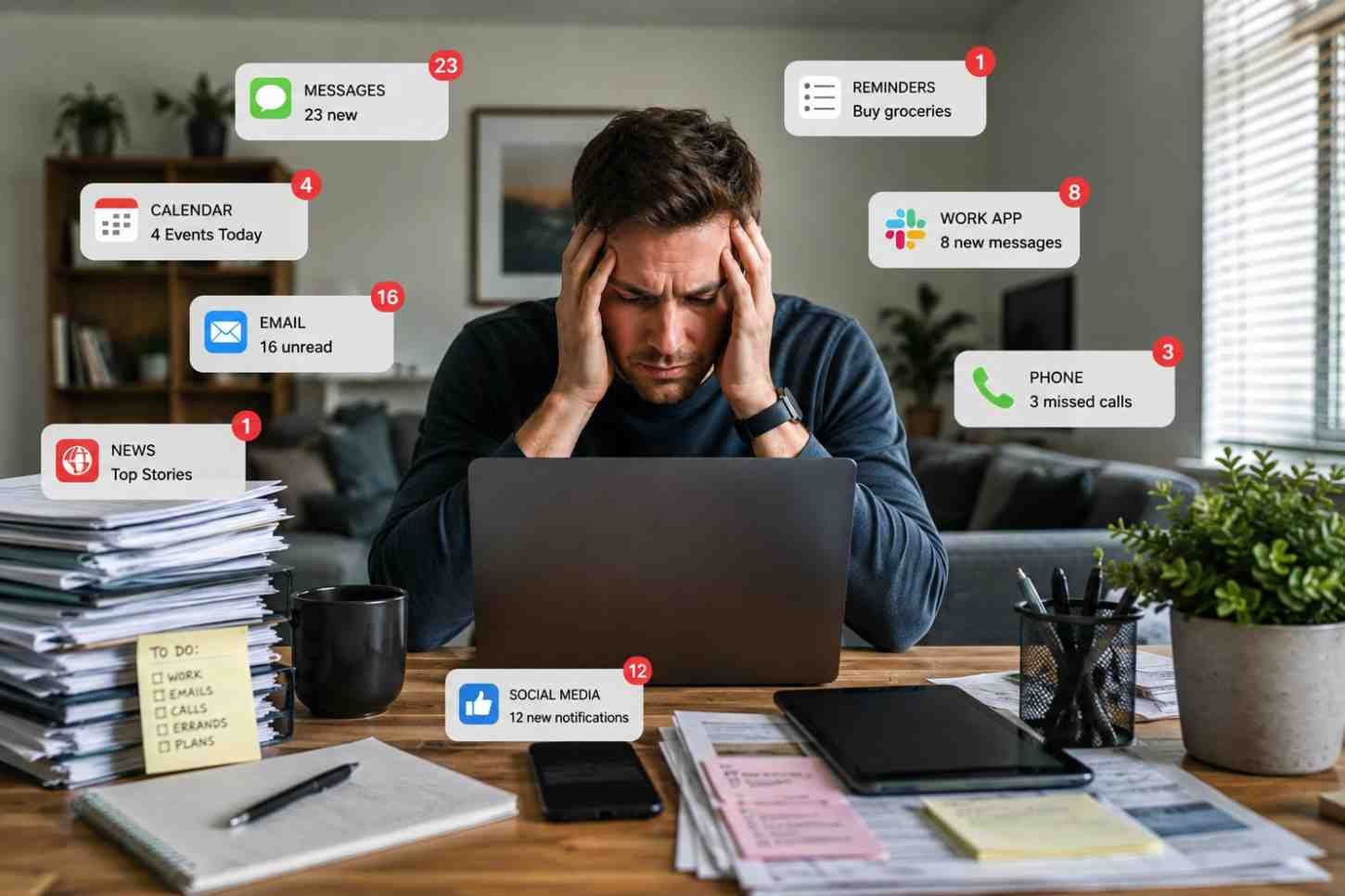
    Turn off nonessential notifications, keep your phone out of reach during focused work, and close unrelated tabs. Set specific times for email, messaging, and social media. Clear expectations about response times can protect your attention without harming relationships.

    Set Boundaries and Say No

    Decide when work begins, when it ends, and which requests deserve your time. Saying yes to every task, invitation, or favour often means saying no to rest. A respectful refusal can be brief: decline, suggest another date, or offer a smaller contribution.

    Clear boundaries are also essential for balancing career goals and personal wellbeing, especially when professional ambition begins to reduce time for sleep, relationships, exercise, or recovery.

    Create a Minimum Plan for Difficult Days

    Illness, caregiving for a person, emergencies, or low energy can disrupt an ideal routine. Create a fallback plan containing one essential task, one basic health action, and one personal responsibility. This approach keeps the day grounded without demanding normal performance during abnormal circumstances.

    Review and Rebalance Weekly

    At the end of each week, ask what worked, what created stress, and what repeatedly remained unfinished. Move, remove, delegate, or simplify tasks based on what you learn. Balance is not permanently achieved; it must adapt as your goals, responsibilities, and energy change.

    Frequently Asked Questions

    1. What are the best time management tips for a balanced life?

    Start with a time audit, choose three priorities, plan the week, protect personal time, reduce distractions, and review your routine regularly.

    2. How can I balance work and personal responsibilities?

    Put professional and personal commitments on the same calendar, set finishing times, add buffer space, and stop treating rest as optional.

    3. Which time-management method works best?

    Time blocking supports structure, a priority matrix improves decisions, and task batching reduces switching. Choose the method you can maintain consistently.

    4. How does planning reduce stress?

    Planning makes responsibilities visible, limits last-minute pressure, creates realistic expectations, and gives you more control over your attention.

    A Better Rhythm Starts Today

    I no longer view time management as a race to finish the largest number of tasks. I see it as a way to give the most important parts of my life the attention they deserve.

    I would begin with one change: protect one personal priority, remove one unnecessary commitment, or choose tomorrow’s three most important tasks tonight. Small decisions repeated consistently can create a calmer schedule, stronger boundaries, and a more intentional life.

  • How to Manage Work Stress at Home: 12 Proven Fixes

    How to Manage Work Stress at Home: 12 Proven Fixes

    I used to think closing my laptop meant the workday was finished. Yet deadlines, tense conversations, and unfinished tasks often followed me into dinner, family time, and bed. 

    Learning how to manage work stress at home requires more than distraction. It means creating a clear transition, protecting personal boundaries, calming the body, and addressing workplace problems that relaxation cannot solve.

    Why Does Work Stress Follow You Home?

    The brain does not instantly shift from work mode to rest. A difficult meeting, overloaded inbox, unclear expectations, or incomplete project can keep demanding attention after hours. Remote work can intensify this when one room serves both purposes.

    Stress also lingers when the day has no clear ending. Checking one message can become another hour online, while replaying conversations can disrupt sleep, patience, relationships, and enjoyment outside work.

    Signs Work Stress Is Affecting Home Life

    Warning signs include irritability, constant email checking, reasons for headaches, muscle tension, poor sleep, and difficulty concentrating on conversations. You may feel guilty while resting or notice that anxiety about Monday begins earlier every weekend.

    These reactions suggest that your workload, routines, or boundaries need attention. Reduce avoidable pressure and identify problems requiring workplace action.

    Practical Ways to Leave Work Behind

    Practical Ways to Leave Work Behind

    Create an End-of-Day Brain Dump

    Before finishing, record incomplete tasks, decisions you are waiting for, and tomorrow’s first action. This gives unfinished work a reliable storage place. Keep the list short.

    Use a Five-Minute Shutdown Ritual

    Follow the same sequence each day: save your work, review tomorrow’s priorities, close communication apps, clear the workspace, and acknowledge that the day is over. Repetition strengthens the work-home boundary.

    Build a Replacement Commute

    Working from home removes the transition once provided by travel. Replace it with a walk, stretching, a shower, or ten quiet minutes outside. Let it mark a change of role, not another target.

    Turn Off Work Notifications

    Disable routine alerts after your scheduled finish time. Remove work email from your home screen or use a separate browser profile. When on-call duties exist, clarify which situations require an immediate response and which can wait.

    These boundaries also make it easier to plan a work-free weekend without messages and unfinished tasks repeatedly pulling you back into work mode.

    Separate Work From Rest Physically

    A private office is helpful but not essential. In a small home, place equipment in a drawer, cover the desk, close the laptop, or pack supplies into a basket. That visible change keeps work from controlling the evening.

    Calm Your Body First

    Stress can appear as shallow breathing, clenched muscles, restlessness, or exhaustion. Try slow breathing, gentle movement, music, warm water, or a snack before discussing the day. A short reset can stop frustration spilling onto others.

    Explain What You Need

    Family members or housemates may not realize you need transition time. Make a direct request: “I need fifteen quiet minutes after work, and then I will be ready to talk.” This is healthier than withdrawing without explanation.

    Protect the First Hour After Work

    Avoid filling the first hour with extra decisions. Practising intentional living habits for busy professionals can help you create an evening routine that reflects your priorities instead of allowing work demands to control your personal time.

    Prepare easy meals or follow a predictable evening routine. Fewer decisions preserve energy for relationships and genuine rest.

    Challenge Repetitive Work Thoughts

    Ask whether action is possible tonight. If it is, record the next step. If it is not, remind yourself that worrying is not problem-solving. Return attention to the present.

    Address the Workplace Cause

    Personal habits cannot repair chronic understaffing, harassment, conflicting priorities, or an impossible workload. To practice how to manage work stress at home effectively, document specific problems and discuss priorities with your manager.

    Ask what should move when a new urgent task arrives. Request realistic deadlines, resources, or support instead of silently agreeing to an unmanageable workload.

    Try This 10-Minute After-Work Reset

    Try This 10-Minute After-Work Reset

    Spend two minutes writing tomorrow’s first steps. Use three minutes to close and store work materials. Move for three minutes, then breathe slowly for two minutes without checking a screen. Consistency matters more than perfection.

    This reset works because it combines mental closure, physical closure, movement, and relaxation. Follow the same sequence regularly so your mind begins to recognize it as the end of the working day.

    When Should You Seek Support?

    Consider contacting a health professional, counselor, Employee Assistance Program, or workplace representative when stress remains intense, disrupts sleep, creates frequent physical symptoms, harms relationships, or causes persistent dread.

    Seeking support does not mean you are unable to handle pressure. It can help you understand the source of your stress, develop healthier coping strategies, and decide whether workplace changes are necessary. Seek immediate local help when you feel unsafe or unable to cope.

    Frequently Asked Questions

    1. How can I stop thinking about work after hours?

    Write down unresolved tasks, select tomorrow’s first action, disable notifications, and use a consistent transition activity. This signals that the work has been captured.

    2. How do I set boundaries while working remotely?

    Choose clear start and finish times, communicate your availability, use a designated work zone, and store equipment after work. Do not answer routine messages merely because the computer is nearby.

    3. What quickly reduces stress after work?

    Step away from screens, slow your breathing, relax tense muscles, drink water, and take a brief walk. Save important conversations until your body has settled.

    4. How to manage work stress at home when the workload is excessive?

    Use calming routines outside work, but also document assignments, clarify priorities, request realistic deadlines, and discuss your available capacity with the appropriate person.

    Reclaiming My Evenings

    I have learned that protecting home life does not require an elaborate routine. A written task list, a clear stopping time, a short walk, and honest communication can create meaningful separation.

    When the job itself is the problem, I must raise the issue instead of treating burnout as a personal weakness. Small boundaries practiced consistently help me return home mentally, not only physically.

  • 30 Day Mindful Spending Challenge For Beginners

    30 Day Mindful Spending Challenge For Beginners

    I created this 30 day mindful spending challenge for beginners for people who want more control without suffering through a joyless no-spend month. You will still pay bills, buy groceries, and enjoy planned treats. The goal is to notice each purchase, interrupt automatic habits, and redirect money toward what matters.

    This is not a financial punishment. It is a 30-day experiment in attention. The 30 day mindful spending challenge for beginners rewards awareness rather than deprivation.

    Why This Challenge Works Without Feeling Punishing

    Most spending problems do not begin at checkout. They often begin with boredom, stress, convenience, social pressure, or a sale timer.

    Research has connected impulse buying with emotional states, environmental cues, advertising, and limited time for careful evaluation. Both positive and negative emotions may influence purchasing behavior.

    The Consumer Financial Protection Bureau recommends recording expenses and reviewing spending by week or month. Tracking creates a realistic picture of your habits instead of forcing you to depend on memory.

    The Friction Ladder

    My original element is a method called the friction ladder. Instead of banning every enjoyable purchase on day one, you introduce small barriers in stages:

    1. Notice the purchase.
    2. Name the emotional trigger.
    3. Wait before buying.
    4. Remove one-click convenience.
    5. Compare the purchase with a financial goal.

    This structure makes the 30 day mindful spending challenge for beginners easier to continue when your early motivation fades.

    30-Day Mindful Spending Plan at a Glance

    Phase Days Main focus Practical result
    Set boundaries 1–5 Essentials, wants, tracking, subscriptions A clear spending baseline
    Build awareness 6–15 Waiting, no-spend days, triggers, lists Fewer automatic purchases
    Optimize systems 16–25 Pantry meals, cash, savings, payment friction More money redirected
    Lock in habits 26–30 Goals, wishlist, audit, reflection Sustainable personal rules

    Use the 30 day mindful spending challenge for beginners as a daily sequence, not a pass-or-fail test. Missing one task does not erase the progress you have already made.

    Days 1–5: Set Mindful Money Ground Rules

    Set Mindful Money Ground Rules

    Build an Honest Spending Baseline

    Day 1: Define your allowed essentials. List housing, utilities, insurance, transportation, medication, minimum debt payments, and basic groceries.

    Day 2: Identify discretionary wants. Choose categories you will pause or limit. These may include delivery meals, clothing, beauty products, entertainment, and unplanned online orders.

    Day 3: Select one tracking method. Use a notebook, spreadsheet, bank export, or budgeting app. The best method is the one you will update consistently.

    Day 4: Record every transaction. Add the amount, category, store, and emotion you felt before buying. Tracking emotions makes your spending log more useful.

    Day 5: Audit recurring expenses. Review streaming services, memberships, apps, storage plans, and subscription boxes. Cancel services you no longer use.

    Cancel the service through its provider rather than only blocking the payment. CFPB guidance explains that stopping an automatic payment does not always cancel the underlying contract or amount owed.

    At this stage, do not judge your totals. The 30 day mindful spending challenge for beginners needs accurate information more than perfect behavior.

    Days 6–15: Break the Impulse-Buying Loop

    Break the Impulse-Buying Loop

    Add Friction Before Checkout

    Day 6: Apply a 48-hour waiting rule. Save non-essential items to a list instead of purchasing them immediately.

    Day 7: Complete your first no-spend day. Scheduled bills may proceed, but avoid creating any new transactions.

    Day 8: Unsubscribe from promotions. Remove retail emails, sale alerts, and promotional text messages.

    Day 9: Delete shopping apps. Remove stored card information from your browser and favorite retail websites.

    Day 10: Examine your triggers. Learn to identify emotional spending triggers and mark purchases connected to boredom, stress, fatigue, celebration, comparison, or loneliness.

    Day 11: Convert prices into work hours. A $120 purchase represents five hours of work when your usable hourly income is $24.

    Use take-home pay rather than your gross wage. This produces a more realistic comparison.

    Day 12: Shop from a strict list. Write your items and maximum budget before entering a store or opening a shopping website.

    Day 13: Substitute before buying. Borrow, repair, rent, or repurpose something when you only need it once.

    Day 14: Review your first two weeks. Compare your discretionary spending with a normal two-week period.

    Day 15: Practice “good enough” buying. Choose the option that meets your real need without paying for features, upgrades, or perfection you will barely use.

    Consider this worked example. Someone normally spends $36 each week on coffee, $70 on delivery, and $60 on impulse retail purchases. Cutting those expenses by only half saves about $332 over four weeks.

    That is meaningful progress without removing every enjoyable purchase.

    Days 16–25: Redirect Money Toward Real Goals

    Redirect Money Toward Real Goals

    At the halfway point, the 30 day mindful spending challenge for beginners turns avoided purchases into visible financial progress.

    Turn Savings Into a System

    Day 16: Plan free weekend entertainment. Look for parks, library activities, community events, free museum days, or a casual potluck.

    Day 17: Complete your second no-spend day. Notice whether the day feels easier than your first attempt.

    Day 18: Build meals from your pantry. Check canned food, frozen ingredients, and leftovers before buying more groceries.

    Day 19: Calculate joy per dollar. Rate a recent purchase from one to five. Then consider its price and number of uses.

    A $40 item used 20 times may deliver more value than a $15 item used once. The cheapest option is not always the most mindful choice.

    Day 20: Use cash for one problem category. Place a fixed amount in an envelope for coffee, dining out, or personal treats. A visible limit makes overspending harder to ignore.

    Day 21: Automate a payday transfer. Schedule a manageable amount to move into savings when your paycheck arrives.

    Both the CFPB and FDIC identify automatic deposits as a practical method for developing consistent savings habits.

    Day 22: Start an emergency fund. Send some of your challenge savings into a dedicated cash reserve.

    The CFPB describes an emergency fund as money set aside for unplanned costs, including repairs, medical bills, or lost income.

    Day 23: Separate your savings. Keep emergency money away from everyday checking. For US readers, consider an FDIC-insured savings account and review its balance requirements and fees.

    Day 24: Complete your third no-spend day. Use what you already own for food, entertainment, and daily activities.

    Day 25: Unlink digital wallets. Disable one-click checkout or require yourself to enter payment information manually.

    The 30 day mindful spending challenge for beginners now shifts from resisting purchases to protecting your progress.

    Days 26–30: Make Conscious Spending Last

    The final phase of the 30 day mindful spending challenge for beginners converts temporary rules into a personal money system.

    Review Value, Not Just Dollars

    Day 26: Create an intentional wishlist. Record items you genuinely want and give each one a 30-day waiting period.

    Include the price, reason for wanting it, expected number of uses, and the date you may reconsider it.

    Day 27: Define two financial goals. Write one short-term goal and one long-term goal. Give each a target amount and completion date.

    Day 28: Select three habits to continue. Strong options include a weekly spending review, one no-spend day, and a 48-hour waiting rule.

    Do not keep all 30 rules. Retain the few that changed your behavior most.

    Day 29: Complete your final audit. Compare spending by category instead of focusing only on the total. You may discover that one small category caused most of the leakage.

    Day 30: Document the change. Write down your strongest trigger, easiest adjustment, hardest day, total savings, and next financial action.

    To finish the 30 day mindful spending challenge for beginners, create one personal rule based on your results. Mine for this framework is simple: convenience deserves a budget, not unlimited access.

    Frequently Asked Questions

    1. What Can I Buy During the Challenge?

    Buy planned essentials and approved treats while pausing purchases that are unplanned, emotionally driven, or outside your category limits.

    2. How Much Can a Beginner Save in 30 Days?

    Savings vary, so compare four weeks of reduced discretionary spending with your usual monthly baseline.

    3. What Happens After a Spending Mistake?

    Record it, identify the trigger, and continue the 30 day mindful spending challenge for beginners with your next purchase.

    4. Can Couples Complete the Challenge Together?

    Yes. Agree on shared essentials, individual spending limits, and a judgment-free weekly review before starting.

    Your Wallet Is Not the Main Character

    I do not measure success by a perfect month or a dramatic savings screenshot. I measure it by the pause before checkout and the confidence to say, “Not now.”

    Start the 30-day mindful spending challenge for beginners by listing tomorrow’s essentials tonight. Then remove one shopping shortcut from your phone.

    Your money does not need stricter punishment. It needs clearer instructions.

  • Weekend Side Hustles for Dental Hygienists You Haven’t Considered

    Weekend Side Hustles for Dental Hygienists You Haven’t Considered

    A dental hygiene license can create earning opportunities beyond a weekday operatory schedule. The best weekend side hustles for dental hygienists use clinical knowledge, patient communication, and healthcare credentials without creating an exhausting seven-day workweek. I compare each option by earning potential, physical strain, startup cost, licensing rules, and weekend availability.

    The U.S. Bureau of Labor Statistics reported a median annual wage of $94,260 for dental hygienists in May 2024. Pay varies by state, employer, and experience.

    Which Weekend Dental Hygiene Side Hustles Pay Well?

    1. Pick Up Saturday Dental Hygiene Temp Shifts

    Weekend temping often offers the fastest route to extra income because you already have the required skills. Dental offices with Saturday hours may need short-term coverage because of vacations, illness, staffing shortages, or increased patient demand. However, knowing how to plan a work-free weekend can help you protect your energy and avoid overcommitting.

    Cloud Dentistry lists temporary dental jobs, while DentalPost carries dental hygienist and temp opportunities. Before accepting a shift, confirm the hourly rate, appointment length, available instruments, cancellation policy, and whether the office will classify you as a W-2 employee or independent contractor.

    2. Offer Mobile Teeth-Whitening Services

    Mobile whitening may attract clients preparing for weddings, photographs, or special events. You could work with a dentist, salon, event planner, or legally compliant mobile dental business.

    State laws differ, so never assume your dental hygiene license allows independent whitening services. Check your state dental board, supervision rules, liability insurance, infection-control duties, and dental practice act before advertising or purchasing equipment.

    3. Join Military Dental Readiness Events

    Join Military Dental Readiness Events

    Contractors and dental teams support readiness care for National Guard and Reserve members. Depending on the assignment and state rules, dental hygienists may assist with records, radiographs, preventive services, cleanings, or other authorized clinical support.

    Search healthcare contractor career pages for reserve health, dental readiness, or mobile dental event roles. Confirm the credentialing process, travel expectations, clinical duties, employment classification, and compensation before accepting an assignment.

    4. Train in Orofacial Myofunctional Therapy

    Myofunctional therapy may suit hygienists interested in oral posture, breathing, chewing, swallowing, and orofacial muscle patterns. Some appointments can take place virtually, making this a potentially flexible remote service.

    IAOM certification eligibility for registered dental hygienists includes approved education, a 28-hour course, an application, and a proficiency examination. You should also verify state laws, telehealth regulations, referral expectations, and professional liability coverage.

    What Nonclinical Side Jobs Use Dental Hygiene Skills?

    5. Work in Dental Sales or Product Education

    Oral-care brands, distributors, and event agencies may need knowledgeable professionals for product demonstrations, dental conventions, retail trade shows, and training sessions. Brands such as Oral-B and Sonicare illustrate the types of companies operating in this market.

    Your clinical background can help you explain toothbrushes, interdental products, whitening systems, and preventive-care tools. Avoid unsupported health claims and disclose paid relationships when required.

    6. Become a CPR or BLS Instructor

    Dental offices and healthcare teams regularly need CPR and Basic Life Support training. The American Heart Association requires instructor candidates to hold a current provider card, complete instructor training, finish a monitoring component, and align with an authorized Training Center.

    Once qualified, you can organize weekend classes for dental teams, healthcare students, caregivers, schools, or community groups.

    7. Tutor Dental Hygiene Students for the NBDHE

    Tutor Dental Hygiene Students for the NBDHE

    Online tutoring is a low-impact dental hygiene side job. You can teach periodontology, radiography, pharmacology, community health, clinical theory, instrumentation, or National Board Dental Hygiene Examination strategies.

    Wyzant lists dental hygiene educators, including tutors who support NBDHE preparation. You could begin with individual video sessions and later offer Saturday study groups or structured board-exam preparation packages.

    8. Create Dental Content and Educational Media

    Dental practices, publishers, software companies, and oral-care brands need accurate blogs, patient handouts, newsletters, scripts, and board-review materials. You can also create a specialized YouTube channel covering study strategies, ergonomics, home care, product education, or dental career advice.

    Create polished samples and choose a focused niche. Never reuse patient information, employer materials, or protected examination questions.

    9. Teach Weekend Clinical or Continuing Education Classes

    Dental hygiene programs, dental assisting schools, community colleges, and continuing education providers may hire adjunct instructors, laboratory supervisors, or clinical evaluators.

    Educational requirements vary by institution, but experienced hygienists with strong communication and mentoring skills can turn weekend teaching into a meaningful professional side job.

    10. Manage Dental Social Media or Remote Administration

    Local dental practices may pay a hygienist to create accurate captions, short-video ideas, content calendars, and patient-friendly explanations. This work can usually be completed from home during evenings or weekends.

    Insurers, consultants, and group practices may also offer remote jobs involving dental claims, records, coding support, patient education, scheduling, or quality review. Define your deliverables, privacy procedures, and payment terms before starting.

    11. Sharpen Instruments or Sell Original Study Resources

    Sharpen Instruments or Sell Original Study Resources

    With proper hands-on training, dental instrument sharpening can become a specialized local weekend service. You could collect instruments from nearby practices, sharpen them during the weekend, and return them before the office reopens.

    You can also create original flashcards, planners, clinical checklists, or study schedules. Digital products may generate repeat sales, but they still require updates, customer support, and marketing.

    How Can Dental Hygienists Avoid Weekend Burnout?

    When I compare weekend side hustles for dental hygienists, I look beyond gross pay. Travel, taxes, supplies, preparation, physical fatigue, and lost personal time all affect your real profit.

    Start with one or two weekends per month. Alternate clinical shifts with lower-impact work and monitor soreness, sleep, and energy. Adding another full clinical day may not be worthwhile if your regular hygiene schedule already causes hand, neck, shoulder, or back discomfort.

    Independent contractors must report gig income. The IRS generally requires a tax return when net self-employment earnings reach $400, so keep receipts and accurate business records.

    Frequently Asked Questions (FAQs)

    1. Can a Dental Hygienist Work Only on Saturdays?

    Yes. Dental offices, staffing platforms, educational programs, conventions, community events, and training providers may offer Saturday assignments. Availability depends on your location, license, experience, and professional network.

    2. What Is the Best Side Hustle for a Hygienist With Hand Pain?

    Tutoring, dental writing, social media management, insurance support, digital products, and teaching usually create less hand strain than accepting another clinical hygiene shift.

    3. Can Dental Hygienists Legally Offer Teeth Whitening?

    It depends on state law, supervision requirements, the products used, and how the service is marketed. Contact your state dental board before providing whitening independently.

    4. How Can a Dental Hygienist Make Money From Home?

    Online tutoring, legally permitted virtual myofunctional therapy, dental content writing, YouTube content, social media services, digital resources, and some insurance roles can be performed remotely.

    Which Dental Hygiene Side Hustle Should You Choose?

    The right option depends on whether you want immediate earnings, specialized work, or a gradual move away from chairside care. Temping can pay quickly, while teaching, therapy, content creation, and digital products may offer longer-term growth.

    I believe the strongest weekend side hustles for dental hygienists protect both income and career longevity. Test one idea, measure your profit and energy, and expand only when the additional work remains financially and physically sustainable.

  • Why Slow Living Improves Mental Wellbeing Through Everyday Choices

    Why Slow Living Improves Mental Wellbeing Through Everyday Choices

    Life rarely asks us to slow down. Notifications arrive before breakfast, calendars fill up weeks in advance, and productivity often feels like the only measure of a good day. It’s easy to believe that staying busy means staying successful, even when that pace leaves us mentally drained. After a while, constant rushing starts to feel normal, making it difficult to recognize how much stress we’ve been carrying all along.

    Slow living offers a different perspective. It isn’t about abandoning responsibilities or escaping modern life. Instead, it’s about making thoughtful choices that create room to breathe, think clearly, and reconnect with what actually matters. That’s exactly why slow living improves mental wellbeing through everyday decisions rather than dramatic lifestyle changes.

    What Slow Living Really Means

    What Slow Living Really Means

    Despite its name, slow living isn’t about moving through life at half speed. It’s about living with intention instead of reacting to every demand that comes your way. You decide where your attention goes instead of letting distractions decide for you.

    Many people assume slow living means living in the countryside, quitting a demanding job, or following a perfectly minimalist lifestyle. In reality, it’s much simpler. It could mean eating lunch without checking your phone, finishing one task before starting another, or leaving space in your schedule instead of filling every free moment.

    The goal isn’t to do less for the sake of doing less. It’s to spend your time on things that genuinely improve your quality of life.

    Why Slow Living Improves Mental Wellbeing

    It Helps Your Nervous System Reset

    Our bodies aren’t designed to stay in a constant state of urgency. Endless deadlines, multitasking, and digital interruptions keep the nervous system locked in a “fight-or-flight” mode, increasing cortisol levels and making it harder to relax.

    Choosing a slower pace encourages the opposite response. Your breathing becomes steadier, your heart rate slows, and muscle tension gradually eases. As your nervous system becomes more regulated, your mind has the opportunity to recover from ongoing stress instead of constantly reacting to it.

    This shift doesn’t happen overnight, but small daily habits can make a noticeable difference over time.

    It Reduces Mental Overload

    Modern life demands attention from every direction. Emails, messages, social media, news alerts, and endless to-do lists compete for the same mental space. Constant multitasking often creates more mistakes, more stress, and less satisfaction.

    Slow living encourages single-tasking instead. Focusing on one activity at a time reduces cognitive overload and gives your brain permission to work more efficiently.

    Whether you’re preparing dinner, writing a report, or talking with a friend, giving one task your full attention often feels surprisingly calming.

    It Builds Emotional Resilience

    When life constantly moves at full speed, emotions are easy to ignore until they become overwhelming. Slowing down creates space to notice how you’re actually feeling before stress turns into burnout.

    Instead of reacting impulsively, you become more aware of your thoughts, energy levels, and emotional needs. Over time, this awareness strengthens emotional resilience, making it easier to respond thoughtfully during difficult situations.

    Rather than avoiding challenges, you become better equipped to handle them with greater clarity and patience.

    Everyday Choices That Support Better Mental Wellbeing

    Everyday Choices That Support Better Mental Wellbeing

    Slow living isn’t built on major life changes. It’s built through ordinary moments that gradually reshape how you experience each day.

    • Start your morning without immediately reaching for your phone. Giving yourself even 20 minutes away from screens can reduce digital fatigue before the day begins.

    • Practice mindful chores by paying attention to the physical sensations of washing dishes, preparing meals, watering plants, or taking a shower instead of rushing through them.

    • Walk around your neighborhood without headphones occasionally. Observing changing seasons, local sounds, and everyday surroundings naturally grounds your attention in the present.

    • Protect your schedule by saying no to commitments that don’t align with your priorities. Healthy boundaries reduce unnecessary mental clutter.

    • Create small unplugged rituals, such as brewing coffee, reading a few pages of a book, stretching, or journaling before checking notifications.

    These habits may seem ordinary, but together they reduce the constant pressure that often contributes to anxiety and emotional exhaustion.

    Why Slowing Down Can Make You More Productive

    One of the biggest misconceptions about slow living is that it reduces productivity. In reality, constantly switching between tasks, reacting to interruptions, and working without breaks often leads to decision fatigue and lower-quality work.

    A slower, more intentional pace allows your brain to focus deeply, recover between demanding activities, and make better decisions throughout the day.

    Many people discover they’re actually accomplishing more because they’re spending less time recovering from unnecessary stress.

    Rest also becomes part of productivity rather than something earned only after exhaustion. Taking regular breaks supports concentration, creativity, and long-term performance far better than working nonstop.

    If you’re looking to build intentional living habits for busy professionals, start with one routine instead of changing everything at once. Consistency almost always creates stronger results than chasing the perfect lifestyle.

    Frequently Asked Questions: Why Slow Living Improves Mental Wellbeing Through Everyday Choices

    1. What is slow living?

    Slow living is a lifestyle that encourages making intentional choices about how you spend your time and energy. Rather than constantly rushing, it emphasizes presence, balance, and meaningful daily habits.

    2. Can slow living help reduce stress?

    Yes. Slowing down can reduce chronic stress by lowering mental overload, encouraging nervous system regulation, and creating healthier daily routines that support emotional wellbeing.

    3. Do I need to completely change my lifestyle to practice slow living?

    Not at all. Most people begin with small habits like reducing screen time, focusing on one task at a time, creating better boundaries, or adding quiet moments to their daily routine.

    4. Why does single-tasking improve mental wellbeing?

    Single-tasking reduces cognitive overload and allows your brain to focus more effectively. It often leads to better concentration, less stress, and greater satisfaction with everyday activities.

    When Everyday Choices Begin to Feel Different

    Life probably won’t become less demanding anytime soon, but the way you respond to it can change. Slow living isn’t about escaping responsibility or finding extra hours in the day. It’s about choosing where your attention belongs and recognizing that your mental wellbeing deserves the same care as your physical health. Small pauses, thoughtful routines, and healthier boundaries create space for your mind to recover, making everyday challenges feel more manageable instead of overwhelming.

    You don’t need a completely different life to feel calmer. Sometimes, you simply need a different pace.

  • How Intentional Living Reduces Stress and Overwhelm in Everyday Life

    How Intentional Living Reduces Stress and Overwhelm in Everyday Life

    There was a time when I thought being busy meant I was doing something right. My calendar stayed full, my phone never stopped buzzing, and every small break somehow turned into another task that needed attention. I kept telling myself things would calm down once I finished the next project, answered the next email, or crossed one more thing off my list. They never did. The more I tried to keep up, the more overwhelmed I felt.

    What finally made a difference wasn’t a dramatic lifestyle change. It was learning to be intentional with the small decisions I made every day. I stopped saying yes to everything, paid attention to what actually mattered, and realized that slowing down wasn’t the same as falling behind. Looking back, I can see why intentional living has become such an important conversation. It doesn’t remove life’s challenges, but it changes the way we respond to them.

    Why So Many People Feel Constantly Overwhelmed

    Why So Many People Feel Constantly Overwhelmed

    Modern life gives us more choices than ever before. We decide what to watch, what to buy, what to read, when to reply, and how to spend every spare minute. While having options sounds positive, constantly making decisions can quietly drain our mental energy. Psychologists often refer to this as decision fatigue, and it’s one reason even simple tasks can start to feel exhausting by the end of the day.

    Digital distractions make that pressure even heavier. Notifications interrupt conversations, social media competes for attention, and multitasking has become so common that many people rarely focus on one thing at a time. Over time, that constant mental switching creates stress that doesn’t always feel obvious until it starts affecting sleep, mood, or relationships.

    Intentional Living Starts With Knowing What Matters

    Intentional living isn’t about owning fewer things or following a perfectly organized routine. It’s about making choices that reflect your values instead of reacting to whatever demands your attention first.

    When your priorities are clear, saying no becomes easier. You stop filling your schedule simply because you can and begin protecting time for the people, activities, and responsibilities that genuinely deserve it. That shift often reduces stress because your energy isn’t constantly being pulled in different directions.

    Living intentionally also removes the pressure to keep up with everyone else. Instead of comparing your life to someone else’s highlights, you begin measuring success by whether your choices support the life you actually want.

    Being Present Changes More Than You Expect

    Being Present Changes More Than You Expect

    One habit that surprised me the most was learning to focus on one task at a time. At first, it felt slower. I was so used to checking messages while eating lunch or thinking about work during family conversations that slowing down seemed almost unproductive.

    Over time, I noticed something different. Meals became more enjoyable, conversations felt more meaningful, and everyday responsibilities no longer seemed rushed. Mindful presence doesn’t require hours of meditation. Sometimes it’s as simple as putting your phone away during dinner or taking a short walk without listening to anything.

    Those moments create space for your mind to recover, something constant stimulation rarely allows.

    Boundaries Protect More Than Your Time

    Many people think boundaries are about keeping others out, but healthy boundaries often protect what matters most.

    Learning to decline extra commitments without guilt creates room for rest, hobbies, family, and personal growth. That doesn’t mean refusing every request. It means recognizing that every “yes” also means saying “no” to something else.

    Protecting your time also reduces emotional overload. Instead of feeling stretched across dozens of responsibilities, you have the freedom to give your attention fully to what’s in front of you.

    Small Daily Habits Create Lasting Calm

    Small Daily Habits Create Lasting Calm

    Intentional living rarely depends on one big decision. It grows through simple actions repeated consistently.

    A few habits that make a noticeable difference include:

    • Taking three slow breaths before moving from one task to another.
    • Walking without checking your phone.
    • Eating one meal each day without screens.
    • Ending the evening by writing tomorrow’s top three priorities instead of a long to-do list.
    • Asking yourself whether a new commitment supports your values before agreeing to it.

    These habits don’t require extra time. They simply change how you use the time you already have.

    Purpose Gives Everyday Tasks More Meaning

    Not every responsibility can be exciting, but almost every responsibility can have a purpose.

    Cleaning your home becomes creating a peaceful place to relax. Preparing meals becomes caring for your health. Saving money becomes building future security instead of giving something up.

    Connecting ordinary routines to something meaningful changes the experience itself. Tasks that once felt like obligations begin to feel like choices that support the life you’re trying to build.

    That simple shift reduces frustration because your actions feel connected instead of scattered.

    Stress Doesn’t Always Need a Bigger Solution

    Stress Doesn't Always Need a Bigger Solution

    One of the biggest misconceptions about stress management is believing the answer has to be complicated. Expensive retreats, detailed productivity systems, or complete lifestyle overhauls aren’t always necessary.

    More often, relief comes from removing unnecessary pressure rather than adding another habit to your schedule. Fewer distractions, clearer priorities, better boundaries, and intentional moments of rest create a foundation that’s easier to maintain over time.

    Intentional living works because it focuses on what matters instead of trying to fit everything into a single day.

    FAQs: How Intentional Living Reduces Stress and Overwhelm in Everyday Life

    1. What is intentional living?
    Intentional living means making daily choices based on your values instead of reacting to distractions, habits, or outside expectations. It helps create a life that feels more purposeful and balanced.

    2. Can intentional living really reduce stress?
    Yes. By limiting unnecessary commitments, reducing decision fatigue, and focusing on what matters most, intentional living helps lower mental overload and creates a greater sense of control.

    3. Do I need to become a minimalist to live intentionally?
    No. Intentional living isn’t about owning less. It’s about being thoughtful with your time, energy, relationships, and decisions, regardless of how many possessions you have.

    4. What’s the easiest way to start?
    Start small. Choose one daily habit, such as taking mindful breaks, limiting phone distractions, or saying no to one unnecessary commitment each week. Small changes are often the easiest to maintain.

    The Life You Build Comes From the Choices You Repeat

    The more I practiced intentional living, the more I realized that peace rarely comes from finishing everything on a to-do list. It comes from knowing that the things filling your day actually deserve your time and attention. Life will always be busy in different seasons, but being intentional makes it feel less chaotic because your choices begin to reflect your priorities instead of your pressure.

    You don’t need to change your whole life overnight. Sometimes changing the next decision is enough to change the direction you’re heading.

  • Balancing Career Goals and Personal Wellbeing Secrets

    Balancing Career Goals and Personal Wellbeing Secrets

    I once believed success required giving work every available hour. That approach may produce fast results, but it rarely creates a satisfying life. Balancing career goals and personal wellbeing means pursuing progress while protecting health, relationships, values, and recovery.

    Balance does not require dividing every day equally between work and home. Some seasons will be demanding. The goal is to prevent temporary intensity from becoming a permanent pattern that leaves you exhausted.

    What Sustainable Career Success Means

    Sustainable success supports meaningful work and a healthy life. It protects the energy and personal stability needed to keep developing skills, making decisions, and performing consistently over the course of a career.

    A promotion, salary increase, leadership role, or career change may sound attractive, yet the title does not reveal its full value. Schedule control, commute time, flexibility, workplace culture, benefits, security, and personal meaning determine whether an opportunity improves your life.

    When Ambition Starts Harming Wellbeing

    A busy week before a deadline does not automatically signal poor balance. The problem begins when long hours, constant availability, poor sleep, missed meals, and cancelled plans become normal.

    Warning signs include fatigue, irritability, reduced concentration, anxiety before the workweek, strained relationships, and losing interest in hobbies.

    Recognising the signs your work-life balance is unhealthy can help you address harmful patterns before they develop into severe exhaustion or burnout.  These signs often show that your career plan lacks limits or a realistic definition of enough.

    How to Set Healthy Career Goals

    How to Set Healthy Career Goals

    Define Success Beyond a Job Title

    Describe the life you want your career to support. You may value stability, creative work, flexible hours, leadership, community impact, or family time. A goal becomes healthier when it reflects your values instead of outside pressure.

    “Become a manager within two years” is incomplete. A stronger version could include qualifying for management while protecting two work-free evenings and maintaining regular exercise.

    Choose One Main Goal Per Season

    Separate goals into short-, mid-, and long-term priorities. A short-term goal might involve completing a certification, while a longer goal may involve changing careers.

    Avoid pursuing several demanding goals at once. Select one main professional priority for the current season and let other ambitions move more slowly.

    Set Limits Before Pressure Increases

    Decide what you will not routinely sacrifice, such as sleep, weekends, family commitments, exercise, or medical appointments. Explain your availability, realistic deadlines, and which existing task must move when new work is added.

    Build a Practical Work-Life System

    Audit Your Time and Energy

    Track one typical week and note where your time goes. Then identify which activities increase or drain your energy. Schedule attention-demanding tasks during your strongest hours. Reserve lower-energy periods for email, documentation, and simple follow-ups.

    Schedule Personal Priorities First

    Place workouts, meals, family plans, hobbies, and recovery time on your calendar before the space disappears.

    Treat these commitments with the same seriousness as meetings. Building consistent weekend habits that improve work-life balance can also create space for rest, relationships, and enjoyable activities before a new workweek begins. Treat these commitments with the same seriousness as meetings.

    Time blocking can help, but avoid filling every hour. Leave room for delays and rest.

    Discuss Workloads Early

    When responsibilities exceed available time, speak up before burnout develops. Show your manager the current assignments, deadlines, and trade-offs. Ask which tasks matter most and which can be delayed, delegated, or simplified.

    Measure Progress and Wellbeing Together

    Measure Progress and Wellbeing Together

    Complete a weekly review covering progress toward your main goal, energy, sleep, stress, exercise, relationships, and ability to disconnect.

    Look for patterns rather than judging one difficult day. When professional progress rises while sleep, mood, and relationships decline, reduce the pace, change a deadline, request support, or remove a lower-value commitment.

    Review major goals every six to twelve months. Circumstances, health, and priorities change, so revising a goal can be sensible.

    Use a Trade-Off Test for Career Decisions

    Before accepting a promotion or new job, ask what the opportunity provides, what it requires, and what it may remove from your life.

    A higher salary may offer little benefit when paired with an exhausting commute or unpredictable hours. Compare compensation, schedule control, workload, commute, benefits, growth, culture, and effects on important relationships.

    Adapt the Plan to Your Career Stage

    Recent graduates may need to build skills without making overtime their identity. Mid-career professionals may prioritize autonomy over another promotion. Working parents often need predictable schedules, while remote employees may need a firm shutdown ritual.

    Career changers may accept slower financial progress while training. Career development should support a whole life.

    Frequently Asked Questions

    1. How can balancing career goals and personal wellbeing improve performance?

    It protects energy, concentration, and motivation, making consistent progress more likely while reducing chronic stress and burnout.

    2. How do I pursue a promotion without sacrificing personal life?

    Clarify expectations, establish availability limits, negotiate priorities, and protect essential personal commitments before accepting more responsibility.

    3. What are examples of healthy career goals?

    Examples include gaining a qualification, increasing income, improving leadership skills, changing fields, or earning a promotion within realistic health and time limits.

    4. Is work-life balance possible during a demanding career season?

    Yes. Intense periods can remain manageable when they have a defined endpoint, adequate recovery, honest workload discussions, and protected essentials such as sleep.

    Build a Career That Supports Your Life

    I believe ambition and wellbeing can strengthen each other when success is defined carefully. I do not need every week to feel perfectly balanced, but I need a system that shows when work is taking more than it gives.

    By setting values-based goals, protecting essential needs, reviewing energy alongside achievement, and evaluating trade-offs honestly, I can move forward without losing the health, people, and experiences that make success meaningful.

  • How to Simplify Your Life With Intentional Choices in a World Full of Distractions

    How to Simplify Your Life With Intentional Choices in a World Full of Distractions

    A few months ago, I caught myself spending an entire evening doing things that didn’t actually matter. I answered messages I could have replied to the next day, switched between apps without thinking, and kept saying yes to little requests that slowly filled my calendar. By the end of the day, I was exhausted, but I couldn’t point to anything meaningful I had accomplished. That was the moment I realized my life wasn’t becoming complicated because I had too much to do. It was becoming complicated because I wasn’t paying enough attention to the choices I was making.

    Since then, I’ve stopped looking for dramatic life resets. Instead, I’ve started making smaller decisions with more intention. Some of them seemed insignificant at first, like turning off notifications or protecting an evening for myself. Over time, those simple choices created more space, more clarity, and a stronger sense of control than any productivity hack ever did. That’s exactly why learning how to simplify your life with intentional choices feels so relevant today.

    Why Life Feels So Busy Even When Nothing Important Is Happening

    Why Life Feels So Busy Even When Nothing Important Is Happening

    Modern life rarely gives us a quiet moment. Our phones compete for attention, work follows us home, and every platform offers another recommendation, reminder, or invitation. Even when we’re sitting still, our minds are often jumping from one decision to the next.

    Psychologists describe this as decision fatigue. Every choice, whether it’s what to wear, what to cook, or which notification deserves attention, uses a little mental energy. Individually, those decisions seem harmless. Together, they leave us feeling mentally cluttered before the day is halfway over.

    Simplifying life isn’t about escaping responsibility. It’s about reducing unnecessary decisions, so you have more energy for the ones that genuinely matter.

    Start With What Actually Matters to You

    One lesson I keep coming back to is that it’s impossible to simplify life without knowing what you’re protecting.

    For some people, that’s family time. For others, it’s creative work, health, or financial stability. Once you identify your priorities, everyday decisions become much easier. You stop saying yes simply because you feel guilty. You stop buying things because everyone else has them. You begin asking a different question.

    “Does this support the life I’m trying to build?”

    That single question removes surprising amounts of mental clutter.

    Your Calendar Deserves the Same Attention as Your Budget

    Your Calendar Deserves the Same Attention as Your Budget

    Most people wouldn’t spend money without thinking about it, yet they hand out their time without much hesitation.

    I’ve learned that every commitment has a hidden cost. A dinner invitation, another meeting, or volunteering for one more project doesn’t only take an hour. It also takes preparation, travel, recovery, and attention away from something else.

    Leaving empty space on your calendar isn’t laziness. It’s how you create room for rest, unexpected opportunities, and moments that don’t need to be rushed.

    Sometimes the simplest answer is a polite “no.”

    Make Technology Work for You Again

    Technology saves time until it quietly starts consuming it.

    One change that made an immediate difference for me was turning off almost every non-human notification. My phone stopped deciding what deserved my attention, and I started choosing for myself.

    Creating phone-free spaces also helped. Meals became conversations instead of scrolling sessions. Bedrooms became places to rest instead of catching up on emails.

    These aren’t extreme digital detoxes. They’re practical boundaries that make daily life feel calmer.

    Reduce Decisions You Make Every Single Day

    Reduce Decisions You Make Every Single Day

    Many people underestimate how much energy goes into repetitive choices.

    Simple routines remove that burden.

    Planning meals for the week means fewer last-minute takeout orders. Keeping a smaller wardrobe makes getting dressed quicker. Following a consistent morning routine removes the need to constantly decide what comes next.

    These habits don’t make life boring. They make it easier to focus on bigger priorities.

    Spend With Purpose Instead of Habit

    Buying less isn’t the goal. Buying intentionally is.

    Before making a purchase, I’ve started asking myself whether it solves a real problem or simply fills a temporary emotion. That short pause has helped me avoid unnecessary spending while appreciating the things I already own.

    The same idea applies to subscriptions, memberships, and everyday expenses. Small financial decisions often reflect larger lifestyle habits.

    Living simply doesn’t always cost less, but it usually means spending in ways that align with your personal values.

    Relationships Deserve More Attention Than Notifications

    Relationships Deserve More Attention Than Notifications

    One of the easiest ways to simplify life is surprisingly old-fashioned.

    Spend more time with people who make you feel present.

    Real conversations don’t compete with dozens of notifications. They slow life down in the best possible way. Whether it’s sharing dinner with family, catching up with a close friend, or taking a walk without checking your phone, those moments often become the highlights of the week.

    Many people discover that intentional decisions that improve happiness have very little to do with buying more or achieving more. They usually begin by giving more attention to the people and experiences that already matter.

    FAQs: How to Simplify Your Life With Intentional Choices in a World Full of Distractions

    1. Is simplifying life the same as becoming a minimalist?
    No. Simplifying life means making thoughtful choices that support your priorities. You don’t need to own fewer things unless that helps you live the way you want.

    2. How do I start making more intentional choices?
    Begin with one area, such as your schedule, spending, or screen time. Small changes are easier to maintain than trying to change everything at once.

    3. Can simplifying life reduce stress?
    Yes. Removing unnecessary commitments and limiting daily decisions often creates more mental clarity, better focus, and a greater sense of control.

    4. What habit has the biggest impact?
    Protecting your time is often the most effective starting point. Once your schedule reflects your priorities, other intentional habits become much easier to build.

    The Life You Want Is Hidden Inside the Choices You Make

    I’ve realized that simplifying life isn’t about finding the perfect routine or owning the perfect amount of things. It’s about noticing the small choices that quietly shape each day. Every time you protect your time, ignore unnecessary distractions, or choose what matters over what feels urgent, you’re creating a life that feels lighter without changing everything overnight.

    Simple living rarely begins with one big decision. It grows from hundreds of small ones that finally point in the same direction.

  • How Intentional Living Habits for Busy Professionals Create More Time and Less Stress

    How Intentional Living Habits for Busy Professionals Create More Time and Less Stress

    Some days seem to disappear before you realize what happened. You answer emails, jump from one meeting to another, respond to messages during lunch, and somehow end the day wondering why your most important work never got done. It’s a familiar cycle for many professionals. Being busy has almost become a badge of honor, but staying occupied isn’t the same as making meaningful progress.

    Intentional living offers a different perspective. Instead of letting your calendar, notifications, or endless to-do list dictate every hour, it encourages you to make deliberate choices that reflect your priorities. Small, consistent habits can help you reclaim time, reduce mental clutter, and create a routine that feels sustainable rather than overwhelming. The goal isn’t to do more—it’s to focus on what genuinely matters.

    What Intentional Living Really Means

    What Intentional Living Really Means

    Intentional living isn’t about following a perfect morning routine or abandoning ambition. It’s about making conscious decisions instead of operating on autopilot. Every day presents dozens of choices, from how you start your morning to how you respond to unexpected requests. When those decisions happen without much thought, they often pull your attention away from your priorities.

    Living intentionally means asking a simple question before committing your time or energy: “Does this support what matters most right now?” That mindset gradually changes how you approach work, relationships, health, and even downtime.

    For busy professionals, intentional living isn’t about slowing down for the sake of it. It’s about creating enough clarity to spend your time where it has the greatest impact.

    Why Busy Professionals Feel Like They’re Always Running Behind

    Many people assume they need better time management, but the real challenge often lies elsewhere. Modern work environments encourage constant availability, making it easy to spend the day reacting instead of planning.

    Notifications interrupt focused work every few minutes. Meetings fill calendars without clear outcomes. Emails demand immediate attention, even when they’re not urgent. Over time, these interruptions create decision fatigue, forcing your brain to repeatedly shift focus throughout the day.

    Context switching may seem harmless, but research has consistently shown that moving between unrelated tasks reduces concentration and productivity. By the afternoon, even simple decisions can feel exhausting because your mental energy has already been depleted.

    Intentional living addresses this problem by reducing unnecessary decisions before they happen.

    Why Productivity Alone Doesn’t Solve the Problem

    Why Productivity Alone Doesn't Solve the Problem

    Productivity systems often promise to help you accomplish more in less time. While many techniques are useful, they can unintentionally reinforce the idea that every minute must be optimized.

    Intentional living shifts the focus from efficiency to purpose. Instead of asking how to complete more tasks, it asks whether those tasks deserve your attention in the first place.

    That subtle difference changes everything.

    A full calendar doesn’t always represent meaningful progress. Sometimes, removing one unnecessary commitment creates more value than adding another productivity tool.

    When your schedule reflects your priorities instead of other people’s expectations, work becomes more manageable, and stress naturally begins to decline.

    Intentional Living Habits That Help You Reclaim Your Time

    Practice Radical Prioritization

    Every task feels important when everything arrives at once. That’s why intentional professionals regularly separate urgent work from meaningful work.

    One practical approach is using the Eisenhower Matrix, which organizes responsibilities based on urgency and importance. Instead of reacting to every notification, this framework encourages you to focus on high-impact tasks while reducing unnecessary distractions.

    This habit also makes it easier to recognize work that can be delegated, postponed, or removed entirely. As fewer low-value activities compete for your attention, your day becomes noticeably less crowded.

    Learn the Value of Saying No

    One of the biggest reasons professionals lose control of their schedules is agreeing to commitments without considering their long-term impact.

    Every meeting, project, or favor occupies space that could have been used elsewhere.

    Intentional living encourages what many experts call the “sacred no.” Declining requests respectfully isn’t about being unhelpful. It’s about protecting your ability to deliver your best work where it matters most.

    Clear boundaries also reduce emotional stress because they eliminate the pressure of constantly trying to satisfy competing expectations.

    Time Block Similar Tasks Together

    Checking email every few minutes may feel productive, but it quietly fragments your attention.

    Instead, consider grouping similar activities into dedicated blocks. Respond to emails during scheduled periods, complete administrative work in one session, and reserve uninterrupted blocks for deep work.

    This technique minimizes context switching while helping your brain remain focused on one type of task at a time.

    Many professionals are surprised by how much extra time appears simply because they’re no longer constantly changing mental gears.

    Frequently Asked Questions: How Intentional Living Habits for Busy Professionals Create More Time and Less Stress

    1. What are intentional living habits?

    Intentional living habits are daily practices that help you make conscious decisions based on your values and priorities instead of reacting to distractions or external demands.

    2. How can busy professionals start living more intentionally?

    Start with one or two simple habits, such as planning your top priorities the night before, time-blocking your calendar, or avoiding emails during the first hour of your morning.

    3. Can intentional living really reduce stress?

    Yes. Intentional habits reduce decision fatigue, create healthier boundaries, and help you focus on meaningful work instead of constantly reacting to interruptions.

    4. How long does it take to build intentional habits?

    The timeline varies for everyone, but consistency matters more than speed. Small habits practiced daily are more likely to become lasting routines than dramatic lifestyle changes.