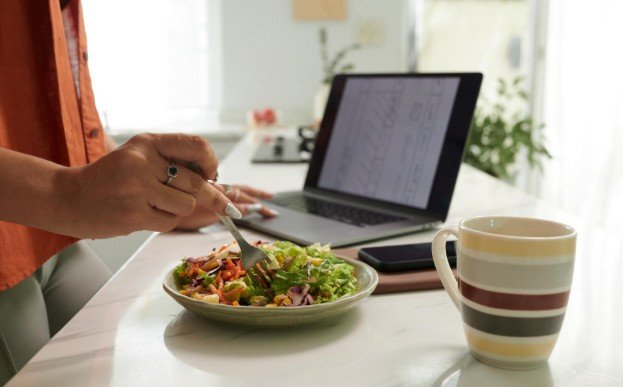
I used to treat lunch as a gap between two busy parts of the day. I often ate beside my laptop, checked messages between bites, and returned to work feeling just as tense as before.
Learning how to create a healthier lunch break routine showed me that a useful midday break needs more than food. It should provide nourishment, distance from work, physical relief, and a calm return. A few repeatable habits can protect your energy and make the afternoon more manageable.
What Makes a Lunch Break Healthy?
A healthy lunch break supports both the body and mind. It includes a satisfying meal, a real pause from work, and an activity that helps you recover. For some people, recovery means walking or stretching.
For others, especially those with physically active jobs, it may mean sitting quietly and resting. Recognizing the signs your work life balance is unhealthy can help you understand when this recovery time is essential. The goal is to return feeling fed, refreshed, and mentally separated from the morning.
Protect Your Break Time
Schedule lunch before the day becomes crowded. Add it to your calendar, set a reminder, or choose a flexible midday window. Treating lunch as a commitment makes it less likely that emails, meetings, and unfinished tasks will consume it.
When an urgent responsibility interrupts your break, move lunch instead of cancelling it. Even 20 protected minutes can be restorative when you are genuinely away from work.
Prepare a Balanced, Practical Meal

Build lunch around protein, fiber-rich carbohydrates, vegetables or fruit, and healthy fat. Grain bowls, soups, wraps, vegetable-filled sandwiches, salads with protein, and leftovers can all work.
Choose food that is easy to prepare and carry. A practical lunch you can repeat is more useful than an ideal meal that creates extra stress. Keep a simple backup such as frozen portions, yogurt, fruit, nuts, or whole-grain crackers for rushed mornings.
Leave Your Work Area
Changing location tells your mind that work has paused. Eat in a break room, outdoors, in a quiet corner, or in another room when working from home.
When leaving is impossible, close work tabs, silence notifications, clear the immediate area, and turn away from the screen. The setting only needs to feel different from your working environment.
Eat Without Screens
Emails keep the brain in work mode, while endless scrolling can make a break feel mentally noisy. Put your phone out of reach for at least part of the meal.
Eat slowly enough to notice taste, hunger, and fullness. Use the time for conversation, music, quiet reflection, or simply looking outside. Let lunch be its own activity instead of combining it with several others.
Choose Movement or Rest
People who sit through the morning may benefit from a short walk, gentle stretching, or simple mobility exercises. People who stand, drive, lift, or move continuously may need seated rest and relaxed breathing.
Five to ten minutes is enough. The purpose is not a difficult workout. It is to give your body the type of recovery your workday requires.
Match the Routine to Your Available Time

A 20- to 30-Minute Break
Spend a few minutes leaving the workspace, around 15 minutes eating, five minutes walking or resting, and the final two minutes preparing to return.
A 45-Minute Break
Use five minutes to transition, 20 minutes to eat, 15 minutes for movement or rest, and five minutes to reset.
A 60-Minute Break
Allow ten minutes to step away, 20 minutes for the meal, 20 minutes for a restorative activity, and ten minutes for a calm return.
Create Better Boundaries at Home
Remote workers can lose lunch boundaries because work and home share one space. Close the laptop, leave the desk, and choose a clear restart time.
Avoid filling the whole break with housework. One small task may be fine, but lunch should still provide recovery. Changing rooms or stepping outside can create useful separation.
Try a Seven-Day Lunch Break Reset
Change one habit at a time. Schedule lunch on day one, prepare food on day two, leave the desk on day three, remove screens on day four, add movement or rest on day five, improve hydration on day six, and review the routine on day seven.
Keep only the habits that fit your schedule, energy, and working environment. A sustainable routine should feel supportive rather than restrictive.
Frequently Asked Questions
1. How can I learn how to create a healthier lunch break routine with only 20 minutes?
Leave your workstation, eat a prepared meal without screens, spend two or three minutes stretching or breathing, and identify the first task you will complete when you return.
2. Is walking after lunch a good habit?
A gentle walk can help people who sit for long periods. Those with active jobs may find seated rest more useful.
3. What should I eat to avoid an afternoon slump?
Choose a balanced meal containing protein, fiber-rich carbohydrates, produce, and healthy fat. Keep the portion satisfying without making yourself feel uncomfortably full.
4. Is eating lunch at my desk always unhealthy?
Not necessarily. Stop working, close notifications, clear the area, and create a firm boundary around the meal.
5. What if meetings interrupt lunch?
Reschedule your break instead of skipping it. A later protected break is better than no break.
Final Thoughts
I have found that the best lunch routine is not the most impressive one. It is the one I can repeat on an ordinary, demanding day. Protecting the time, eating away from work, choosing movement or rest, and returning with one clear priority can transform the middle of the day.
Start with one small change and repeat it until it feels natural. Then add another. Consistency can create better energy, clearer thinking, and a more balanced workday without demanding perfection.