

I’ve caught myself doing something that probably feels familiar. I’d finish a busy day, look back at everything I accomplished, and still wonder why I felt drained. My calendar was full, my phone rarely stopped buzzing, and there was always another task waiting. For a long time, I thought that was simply how modern life worked.
The more I paid attention to the people who seemed genuinely content, the more I noticed a different pattern. They weren’t necessarily less busy. They were simply more deliberate about what deserved their time. That realization completely changed the way I looked at the benefits of living an intentional life. It isn’t about escaping responsibilities or chasing perfection. It’s about making everyday choices that reflect what actually matters to you.
Why Intentional Living Feels Different

Life moves quickly, and it’s easy to spend entire weeks reacting instead of choosing. Notifications interrupt conversations, packed schedules leave little room to think, and saying “yes” becomes the default answer because it’s easier than disappointing someone.
Intentional living offers another way. Instead of letting every outside demand shape your day, you begin making decisions based on your own priorities. That small shift changes more than your schedule. It changes how you experience each day.
You Stop Feeling Pulled in Every Direction
One of the first benefits of living an intentional life is mental clarity.
When every spare minute is filled with scrolling, emails, or constant multitasking, the mind rarely gets a chance to slow down. Creating quiet moments, even for ten minutes, helps reduce mental clutter and makes it easier to focus on what’s directly in front of you.
Many people also find that turning off unnecessary notifications creates an immediate sense of calm. The world doesn’t become quieter overnight, but your attention becomes easier to protect.
Deep work also becomes more natural. Giving one task your full attention often produces better results than trying to juggle five things at once.
Your Decisions Become Easier
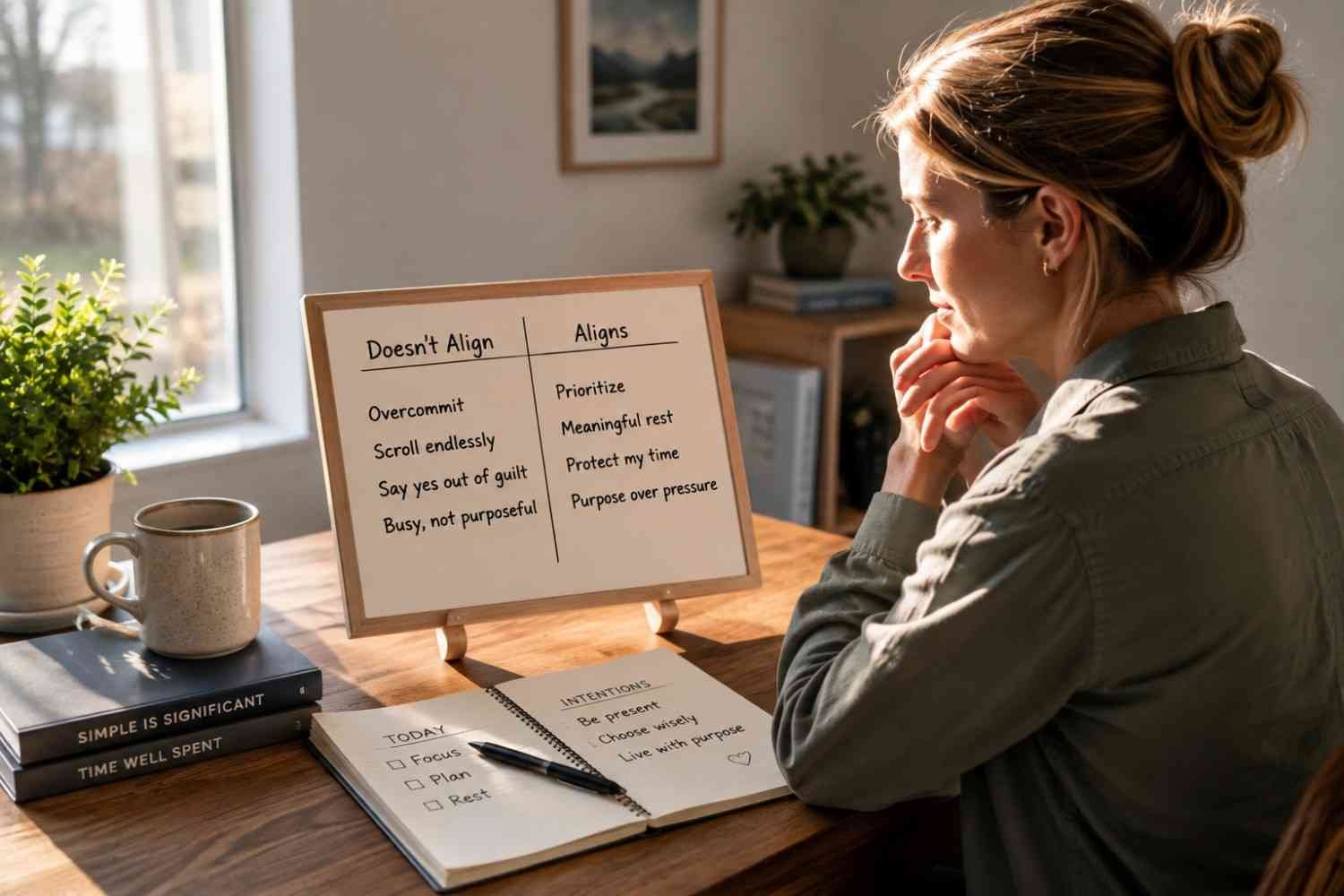
Have you ever spent more time deciding what to do than actually doing it?
Intentional living reduces that constant cycle because your values become your filter. Instead of asking what everyone else expects, you start asking what fits your priorities.
That applies to work, relationships, spending, and even how you spend a free afternoon.
Saying no becomes less uncomfortable because every commitment now has a cost. Protecting your time isn’t selfish. It’s recognizing that your energy is limited and deserves thoughtful choices.
Everyday Habits Feel More Meaningful
Many healthy habits fail because they’re built around pressure instead of purpose.
When your choices become intentional, simple routines begin carrying more meaning. Eating without distractions turns an ordinary meal into a chance to recharge. Walking outside becomes an opportunity to clear your thoughts instead of simply getting from one place to another.
Sleep changes too.
Instead of treating rest as something to fit into whatever time remains, it becomes part of the routine that helps every other part of life function better.
These habits aren’t dramatic, but they often become the ones people stick with the longest.
You Spend With More Confidence

It’s surprisingly easy to buy things without asking why.
Advertising, social media, and comparison culture constantly suggest that happiness is only one purchase away. Intentional living creates enough space to pause before making that decision.
Rather than focusing on having more, people begin paying attention to whether something genuinely improves their daily life.
That approach often leads to fewer impulse purchases, less financial stress, and greater appreciation for what they already own.
Living intentionally doesn’t mean spending as little as possible. It means spending with purpose.
Relationships Become More Genuine
One thing I’ve noticed is that meaningful conversations rarely happen when everyone is distracted.
Intentional living encourages people to be fully present. That might mean putting the phone away during dinner, listening without thinking about the next reply, or choosing quality time over constantly checking notifications.
Those moments may seem small, but they strengthen trust in ways that endless digital communication often can’t.
The people in our lives usually remember our attention far more than our availability.
You Stop Measuring Life Against Everyone Else

Comparison quietly steals satisfaction.
There’s always someone earning more, traveling more, or reaching another milestone first. Living intentionally shifts the focus away from competing with someone else’s timeline.
Instead, success becomes personal.
You begin celebrating progress that actually matters to your own goals instead of chasing expectations created by strangers.
That’s often where real peace begins.
Starting Doesn’t Require Changing Everything
Many people assume intentional living requires a complete lifestyle reset. In reality, it usually begins with a few small decisions.
You might start by:
- Spending ten quiet minutes each morning before looking at your phone.
- Saying no to one commitment that doesn’t align with your priorities.
- Taking a walk without headphones.
- Asking whether your next purchase truly adds value to your life.
Small choices repeated consistently often create the biggest changes.
FAQs: The Quiet Benefits of Living an Intentional Life in a Busy World
1. What does intentional living actually mean?
Intentional living means making daily choices that reflect your values instead of simply reacting to habits, expectations, or outside pressure.
2. Can intentional living reduce stress?
Yes. Choosing priorities, limiting distractions, and protecting your time can reduce decision fatigue and create a greater sense of balance.
3. Is intentional living the same as minimalism?
No. While both encourage thoughtful choices, intentional living focuses on purpose. It doesn’t require owning fewer things unless that supports your goals.
4. How can someone start living more intentionally?
Begin with one small habit, such as creating quiet time each day, setting healthier boundaries, or spending more time on activities that genuinely matter to you.
The Life You Build Is Shaped by Small Decisions
The benefits of living an intentional life rarely appear all at once. They grow through everyday moments that most people overlook. A quiet morning instead of rushing. A meaningful conversation instead of another hour scrolling. A decision based on your values instead of someone else’s expectations. None of these moments seem remarkable on their own, but together they create a life that feels calmer, clearer, and far more satisfying.
Living intentionally isn’t about slowing life down. It’s about making sure the life you’re building actually feels like your own.