

A client who pays $3,000 every month might seem like a financial win. But what happens when that client expects unlimited revisions, weekend availability, and additional projects without paying extra?
That’s exactly why understanding client retainer agreement best practices matters. A well-written agreement establishes what clients receive, how payments work, and where professional responsibilities end.
For freelancers, consultants, marketing agencies, and other service providers, retainer agreements create predictable revenue without sacrificing control over workloads. However, their effectiveness depends on specific contractual protections, not simply collecting recurring payments.
1. Define Services Before Discussing Monthly Fees
One of the biggest mistakes businesses make is agreeing to ongoing work without establishing measurable limits.
Specify Deliverables and Exclusions
Consider a digital marketing consultant charging $2,500 monthly.
The contract could include four blog articles, one strategy meeting, monthly analytics reporting, and two revision rounds per article.
It should also exclude website redesigns, paid advertising budgets, emergency requests, and additional content.
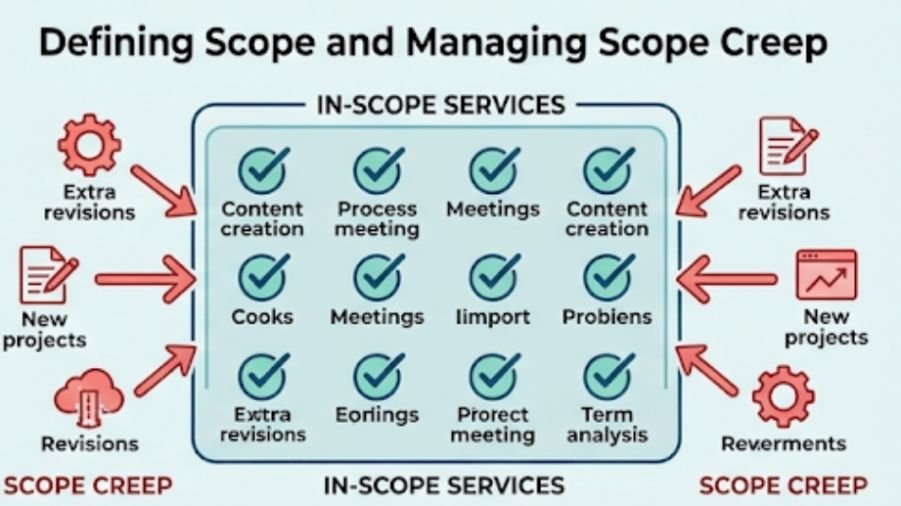
This distinction prevents scope creep, where client requests gradually exceed the original agreement.
Establish a Change-Request Process
Additional work should require written approval before execution.
Specify the hourly rate or project fee for extra services, along with any scheduling adjustments.
This creates flexibility without requiring providers to absorb unexpected costs.
2. Choose the Right Retainer Payment Structure
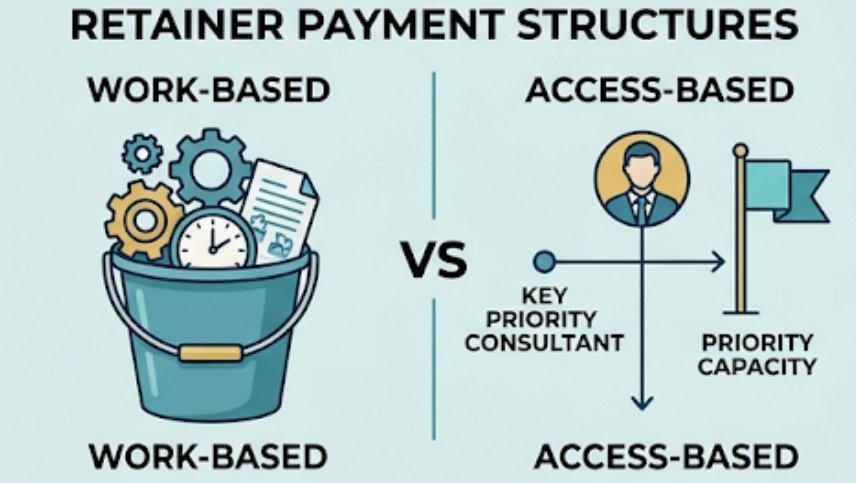
Not every retainer purchases the same thing. Two common arrangements create different expectations.
Work-Based Retainers
Clients purchase a specified quantity of services or professional hours.
For example, a business might pay $1,800 monthly for 15 consulting hours.
The agreement should explain whether unused hours expire, carry forward, or qualify for refunds under applicable law.
Access-Based Retainers
Clients pay to reserve professional availability or capacity rather than purchasing a fixed number of deliverables.
For instance, a cybersecurity consultant might reserve priority consultation slots for a business.
The contract must establish response times, availability limits, and whether additional work incurs separate charges.
Importantly, describing a payment as an availability fee does not automatically make it nonrefundable.
3. Make Payment Terms Impossible to Misinterpret
Predictable payments require more than writing down a monthly price.
Specify the billing date, accepted payment methods, invoice deadlines, applicable taxes, and consequences of late payment.
A practical agreement might require payment on the first business day of each month, with invoices payable within 15 days.
Because delayed client payments can affect a business’s ability to meet recurring obligations, understanding how to calculate business burn rate helps service providers evaluate monthly cash consumption and determine how long available reserves can support operations.
Address Replenishment and Refunds
Some professional relationships use an advance balance that decreases as services are delivered.
An evergreen provision can require clients to replenish that balance when it falls below an agreed threshold.
However, replenishment obligations should not be confused with automatic bank withdrawals unless separately authorized.
For attorney retainers, the ABA’s professional fee guidance explains that unearned advance fees generally must be returned.
Other industries may follow different state laws and contractual requirements.
Avoid assuming that labels such as “nonrefundable” or “deposit” determine a payment’s legal treatment. Explain precisely what the payment purchases and when it becomes earned.
4. Protect Ownership, Confidentiality, and Client Information
Retainer agreements frequently involve valuable intellectual property, proprietary information, and sensitive business records.
Clarify Intellectual Property Rights
For creative services, specify whether clients receive complete ownership, a limited license, or rights transferred after payment.
According to the U.S. Copyright Office, creators generally own original copyrighted work unless applicable employment, work-for-hire, or transfer rules establish otherwise.
A payment alone does not necessarily transfer copyright.
Contracts should distinguish final deliverables from reusable templates, licensed software, and preexisting materials.
Establish Confidentiality Requirements
Define which information must remain confidential, who may access it, and how records should be handled after termination.
For businesses managing customer databases, financial documents, or credentials, include appropriate security responsibilities and breach-notification procedures.
5. Build Fair Termination and Renewal Clauses
Business relationships change. A client might reduce spending, while a consultant might encounter scheduling conflicts.
A termination clause should explain how either party can leave without unnecessary confusion.
Include a reasonable notice period, such as 30 days, and specify what happens to unfinished assignments, outstanding invoices, and unused advance payments.
Make Renewal Expectations Explicit
State whether the agreement renews automatically or requires written approval.
Recurring consumer-facing arrangements may face additional disclosure and cancellation requirements.
Because federal and state rules evolve, review current Federal Trade Commission guidance before implementing automatic renewals.
For business-to-business agreements, applicable obligations may differ.
6. Prevent Overwork and Unrealistic Client Expectations
A monthly retainer should not create an expectation of unlimited availability.
Establish normal working hours, communication channels, response windows, and emergency service pricing.
For example, routine requests might receive responses within two business days, while urgent weekend assistance requires separate approval.
These boundaries also support sustainable working relationships.
Professionals managing demanding schedules can benefit from developing weekend habits that improve work-life balance, particularly when recurring client commitments compete with personal time.
Avoid guaranteeing revenue growth, search rankings, or other outcomes outside your control. Promise defined services and reasonable professional standards instead.
7. Test Your Agreement Before Signing
A useful contract should withstand realistic disagreements, not simply look professional.
Before signing, review these essential elements:
- Confirm the legal names and authorized representatives of both parties.
- List deliverables, exclusions, timelines, and revision limits.
- Identify payment dates, additional fees, and refund conditions.
- Define communication expectations and availability.
- Establish intellectual property and confidentiality provisions.
- Document renewal, cancellation, and dispute-resolution procedures.
- Obtain signatures from both parties before beginning work.
Run a Simple Profitability Check
Suppose a consultant charges $2,400 monthly for 20 hours.
The effective hourly revenue is $120.
If repeated extra requests increase the workload to 30 hours, that figure falls to $80.
This calculation reveals why tracking actual hours remains useful even under fixed monthly retainers.
Review profitability after the first billing cycle and renegotiate when recurring work consistently exceeds agreed limits.
Regularly evaluating client profitability and workload also helps service providers make informed business decisions, and learning how to build a quarterly business review for solo founders can provide a structured way to assess revenue, expenses, client relationships, and growth opportunities.
8. Understand Legal Differences Across States and Industries
A contract template downloaded online may overlook important legal requirements.
The Cornell Legal Information Institute explains that contract law primarily develops through state law, making jurisdiction relevant to enforceability and remedies.
Professional service providers should also consider licensing rules, industry obligations, and worker classification.
A freelancer’s contractual label does not alone determine independent contractor status; actual control and working conditions matter.
For substantial contracts, regulated professional services, or multistate relationships, obtaining legal review can prevent costly mistakes.
Frequently Asked Questions
1. What should every client retainer agreement include?
It should identify both parties, define services, establish payment terms, address additional work, clarify ownership rights, and explain renewal and termination procedures.
2. Are monthly retainer fees refundable?
Refundability depends on the fee structure, services performed, applicable state law, and professional regulations. Clearly written terms help, but cannot override mandatory legal requirements.
3. Can a client cancel a retainer agreement early?
Usually, cancellation depends on the contract’s termination provisions and applicable law. Notice periods, outstanding balances, and refunds should be addressed explicitly.
4. Should freelancers use retainer agreements?
Yes. Freelancers providing recurring services benefit from clearly defined deliverables, payment schedules, revision limits, and communication expectations.
Turn Clear Expectations Into Lasting Relationships
A profitable retainer relationship begins with boundaries that both parties understand.
The strongest agreements do more than protect payments. They create accountability, reduce misunderstandings, and give clients confidence about the services they purchase.
Rather than relying on generic templates, review the actual work involved, identify potential disagreements, and document practical solutions before accepting payment.
Revisit agreements whenever workloads, prices, or business requirements change.
Ultimately, a reliable retainer should make professional relationships easier to manage, not harder. The best contract is one that rarely needs to be questioned because expectations were clear from the beginning.