
One personal purchase on a business credit card might seem harmless, but repeated financial mix-ups can create expensive bookkeeping problems and complicate tax deductions. For American entrepreneurs, learning how to separate business and personal expenses correctly is essential for maintaining accurate records, protecting business finances, and understanding actual profits.
The IRS makes an important distinction: personal expenses generally cannot be deducted simply because they were paid through a business account.
Fortunately, financial separation does not require complicated accounting systems. A few consistent habits can make business spending easier to manage, whether you’re a freelancer, sole proprietor, or LLC owner.
Why Mixing Business and Personal Expenses Creates Problems
Using one bank account for everything makes it difficult to determine how much your business actually earns.
Imagine a freelance designer who receives $7,000 in monthly client payments. During the same month, the account covers $2,000 in business expenses and $2,500 in personal purchases.
Without properly categorizing those transactions, the owner might mistake the remaining cash balance for business profit.
The consequences extend beyond confusing financial statements.
According to the IRS guidance on business expenses, personal, living, and family expenses generally aren’t deductible. Expenses serving both purposes must be divided appropriately.
For LLCs and corporations, consistently mixing funds can also weaken evidence that the business operates independently. However, separate banking alone does not guarantee personal liability protection.
Build a Financial Boundary Before Spending Anything
The easiest way to prevent accounting mistakes is to establish where business money belongs before transactions occur.
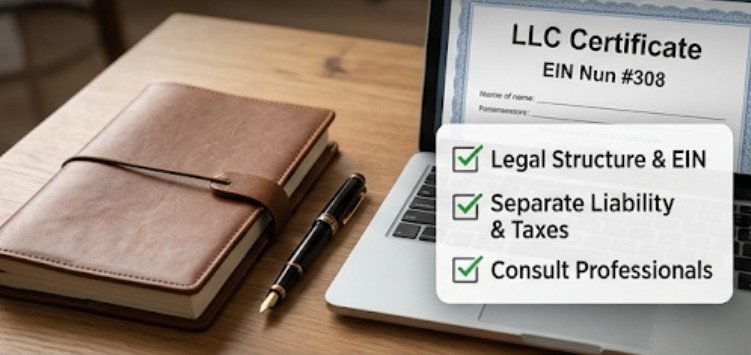
Choose an Appropriate Business Structure
A sole proprietorship is legally different from an LLC or corporation.
Sole proprietors generally report business earnings through their individual federal income tax returns. LLCs and corporations may provide liability protections depending on their structure, state law, and circumstances.
An Employer Identification Number (EIN) can help with banking, payroll, and tax administration. However, not every sole proprietor needs one, and obtaining an EIN does not automatically create a separate legal entity.
Business owners should choose their legal structure based on liability exposure, taxes, administrative requirements, and future plans.
Open a Dedicated Business Bank Account
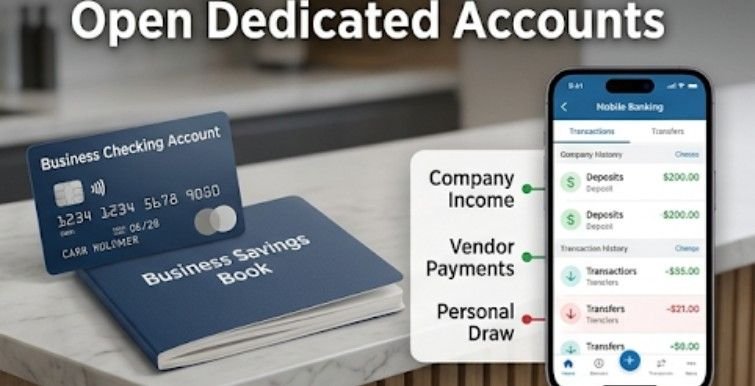
The U.S. Small Business Administration recommends opening a business bank account when you’re ready to accept or spend money for your company.
Small Business Administration
Ideally, your banking arrangement should include a business checking account for everyday transactions and a separate savings account for taxes, reserves, or planned expenses.
Send client payments directly into business checking. Pay contractors, software subscriptions, supplies, and other operating costs from that same account.
Avoid using the account for groceries, household utilities, or family purchases.
Keep Business Credit Card Transactions Separate
A dedicated business credit card creates another useful boundary.
It helps organize recurring subscriptions, travel purchases, advertising expenses, and equipment costs without sorting through personal shopping transactions.
If you cannot qualify for a business credit card, consider reserving one personal card exclusively for business purchases, subject to the card issuer’s terms.
The important distinction is consistent usage, not the card’s appearance.
Know Which Expenses Actually Belong to Your Business
Separating accounts is only the beginning. You must also understand whether an expense qualifies as business-related.
The IRS generally requires deductible operating expenses to be ordinary and necessary for your trade or business.
Common examples include website hosting, professional software, advertising, office supplies, and qualifying contractor payments.
Personal clothing, family vacations, groceries, and household entertainment ordinarily remain personal expenses.
However, some purchases require additional consideration.
Calculate Mixed-Use Expenses Instead of Guessing
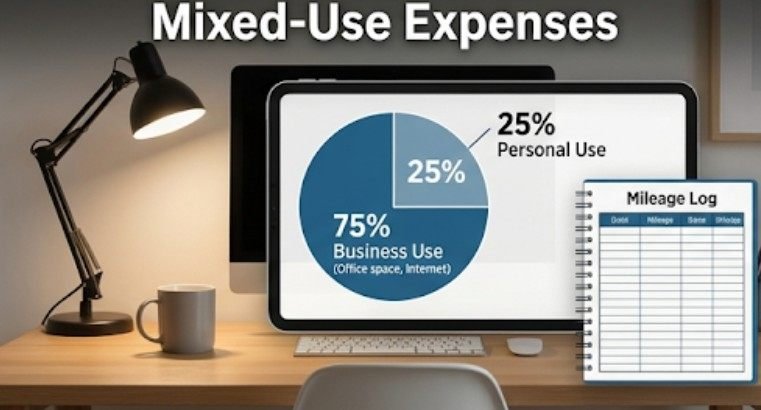
A smartphone, vehicle, or internet connection may serve both personal and professional purposes.
Suppose your monthly phone bill is $100 and reliable records establish that 70% of its use supports your business.
Your calculated business portion would be:
$100 × 70% = $70
That $70 may qualify as a business expense, subject to applicable tax rules.
Vehicle expenses require particular attention because deductible amounts depend on business mileage, the expense method selected, and other eligibility requirements.
For home offices, the rules can be stricter. A space generally must satisfy regular and exclusive business-use requirements, with limited exceptions.
The Utah State University Extension’s business expense guidance also explains the importance of reasonably allocating shared costs and maintaining supporting evidence.
Utah State University Extension
Pay Yourself Without Treating Personal Spending as a Business Cost
Business owners frequently misunderstand the difference between compensation and operating expenses.
Your payment method depends on how your business is organized and taxed.
For a sole proprietor, transferring money from business checking to personal checking is generally an owner’s draw. That withdrawal is not deductible as employee compensation.
Partnership distributions and LLC member payments require treatment appropriate to their tax classification and agreements.
Corporations follow different rules. S corporation shareholder-employees who provide services generally must receive reasonable compensation before taking non-wage distributions.
A practical system is to schedule personal transfers monthly or twice monthly.
For example, an owner might transfer $3,000 into a personal account, leaving sufficient business funds for operating expenses, taxes, and reserves.
Once transferred, personal bills should be paid from the personal account.
Use a Simple Expense Classification Test
If you’re uncertain how to separate business and personal expenses correctly, evaluate each transaction using three questions.
- Business purpose: Was the purchase made primarily to support an identifiable business activity?
- Supporting evidence: Can you explain the expense using receipts, invoices, logs, or other documentation?
- Personal benefit: Does any portion serve personal needs, requiring an allocation or different accounting treatment?
For instance, a $600 laptop purchased for business work may have a legitimate business purpose. However, its tax treatment depends on business use and applicable equipment deduction or depreciation rules.
Likewise, a client dinner is not automatically fully deductible simply because business was discussed.
This test helps categorize spending, but it does not replace expense-specific IRS rules.
Correct Accidental Personal Purchases Without Hiding Them
Even organized entrepreneurs occasionally use the wrong payment method.
The solution is accurate accounting, not deleting the transaction.
If a sole proprietor accidentally purchases $80 worth of groceries using business funds, the payment should generally be classified as an owner’s draw rather than a deductible business expense.
If personal funds cover a legitimate business purchase, record the expense and the corresponding owner contribution or reimbursement, as appropriate.
For corporations or partnerships, mistaken payments may require different treatment, including documented reimbursements, distributions, or compensation.
Repeated errors deserve professional attention because incorrect classifications can affect payroll taxes, financial statements, and owner equity.
Make Receipt Management a Weekly Habit

A separate bank account cannot explain every transaction.
Bank statements establish that money moved, but they may not sufficiently document what was purchased or why.
The FDIC’s Money Smart for Small Business banking materials emphasize the recordkeeping advantages of dedicated business accounts and the usefulness of banking tools that integrate with accounting software.
Instructor Guide
A practical weekly routine includes saving digital receipts, assigning expense categories, checking transactions against statements, and documenting unusual purchases.
At month-end, reconcile each business bank and credit card account.
Cloud accounting software can automate transaction imports, but owners should still review classifications. Automated categorization does not establish tax deductibility.
Keep records for the period required under applicable tax rules rather than assuming every document can be discarded after three years.
Common Mistakes That Undermine Financial Separation
One misconception is that forming an LLC automatically makes every expense paid by the company deductible. It doesn’t.
Another is that a dedicated account guarantees liability protection. Courts and creditors may consider multiple factors, including whether owners respect the entity’s legal independence.
Some owners also assume transferring personal money into a business account creates taxable business revenue. Properly documented capital contributions generally aren’t sales income.
The reverse mistake is treating owner withdrawals as ordinary operating expenses.
SCORE, a nonprofit organization supporting American entrepreneurs, recommends dedicated accounts, consistent financial controls, and regular bank statement reviews to reduce bookkeeping problems.
Its small business financial controls guidance also stresses properly documenting loans between owners and their businesses.
SCORE
Frequently Asked Questions
1. Can I use my personal bank account for a small business?
Sole proprietors may be able to, depending on bank policies, but dedicated business banking simplifies accounting. LLCs and corporations should maintain separate finances to support proper entity administration.
2. What happens if I accidentally pay personal expenses from my LLC account?
Document the transaction immediately. Its correct classification depends on the LLC’s tax structure and circumstances. Ask an accountant whether it requires reimbursement, a distribution, or another adjustment.
3. Are business expenses paid with personal money tax-deductible?
Potentially. Legitimate expenses may qualify if they meet IRS requirements and are properly documented. The payment account alone does not determine deductibility.
4. How often should I reconcile my business accounts?
Monthly reconciliation is a practical minimum. Reviewing transactions weekly helps identify misclassified expenses, missing receipts, and unexpected charges before they become bigger accounting problems.
Keep Business Money Working for Your Business
Understanding how to separate business and personal expenses correctly is less about complicated accounting and more about developing consistent financial habits.
Dedicated accounts, documented owner payments, properly allocated shared expenses, and organized receipts create a clearer picture of business performance.
Start by reviewing your most recent bank statement. Identify personal charges, classify legitimate operating costs, and investigate transactions that lack supporting documentation.
Then establish a straightforward system that prevents those mistakes from recurring.
The real benefit goes beyond easier tax preparation. When personal spending stops distorting your financial records, you can finally see what your business earns, spends, and can afford.