

Three years ago, I stood in my 2,400-square-foot house staring at two spare guest bedrooms nobody had slept in for ten months. Every weekend dissolved into mowing, dusting empty surfaces, or paying $420 monthly electric bills to heat unoccupied air. Choosing to pursue downsizing home for simple living was not an aesthetic trend for me; it was an act of personal preservation.
Trading that sprawling suburban footprint for an efficient 850-square-foot cottage gave me back 15 hours of free time every single week and cut my overhead by nearly 40 percent.
Living small does not require ascetic deprivation. It requires aligning your square footage with how you actually spend your waking hours. When you remove surplus space, you stop housing things you do not use and start funding the life you want to lead.
The Biological and Financial Relief of Living in Less Space
The benefits of shedding physical bulk show up quickly in your body and bank account.
Cortisol and the Mental Weight of Excess Possessions
Visual clutter acts as low-grade neurological friction. When researchers at the UCLA Center on Everyday Lives of Families tracked dual-income households, they discovered an indisputable link between high densities of household goods and elevated levels of the stress hormone cortisol, particularly among women. Every unorganized drawer, stray paper stack, and overflowing storage bin signals unfinished work to your brain.
When I cut my belongings in half, my background anxiety dropped precipitously. A clean room demands zero subconscious triage. Less floor space produces immediate quiet.
Breaking the Unspoken Cost of Storing Clutter
According to recent consumer data from the U.S. Bureau of Labor Statistics, housing expenses consistently consume more than 30% of average American household spending. Much of that money funds unused real estate.
During my move, I formulated what I call the Holding Cost Audit:
AnnualHoldingCost=FootprintofItem(sqft)AnnualHousingCostTotalHomesqft
I owned a bulky heirloom armoire occupying 12 square feet of floor space. In my previous home, housing that single unfunctional cabinet cost me nearly $300 every year just in mortgage, property taxes, and conditioning expenses. Realizing I was paying rent on dead furniture made letting go easy.
Strategic Planning: The 4-Box Micro-Zone System
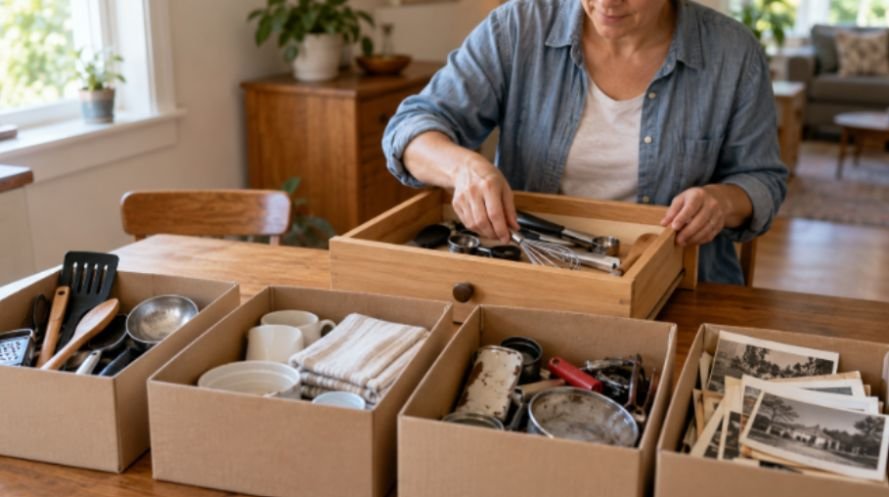
Burnout happens when people try to pack or clean an entire bedroom in an afternoon. I avoided decision paralysis by working in strict 20-minute daily micro-sessions using a four-category filter.
+——————————————————-+
| MICRO-ZONE SORTING |
| |
| [ KEEP ] Essential utility or daily love |
| [ DONATE/SELL] Clean, working duplicates |
| [ TOSS ] Broken, expired, unusable items |
| [ DIGITIZE ] Documents, photos, bulky records |
+——————————————————-+
Setting Strict Boundary Boxes
Bring four physical bins into a single micro-area—one spice cabinet, one bathroom drawer, or a single closet shelf:
- Keep: Objects with daily utility or clear purpose.
- Donate/Sell: Working duplicates and clothing unworn during the previous twelve months.
- Toss: Damaged items, expired medicines, and spent supplies.
- Digitize: Tax records, manuals, receipts, and old photographs.
Scanning thick paper files into cloud storage during a focused digital declutter eliminated two heavy metal filing cabinets from my floor plan. When you purge papers digitally, verify backup encryption before recycling paper sheets.
Preserving High-Friction Sentimental Keepsakes for Last

Starting your purge with childhood keepsakes, yearbooks, or family heirlooms stalls progress instantly. Your decluttering muscles need training on low-stakes utility items like mismatched kitchen spatulas and expired sunscreens.
Save sentimental items for your final two weeks. By the time I opened my old photo bins, I had developed crisp decision-making habits. I kept a single “Memory Chest” with fixed interior dimensions (181210 inches). If an heirloom could not fit inside that boundary, I photographed the item, wrote down the memory behind it, and offered it to extended family before donating it.
Designing Compact Spaces for Flow and Minimal Friction

Moving into a reduced footprint exposes poor spatial design. Without smart layout planning, a small house feels cluttered fast.
For people managing demanding schedules, intentional living habits for busy professionals can make it easier to maintain a clutter-free home while protecting time and energy for what matters most.
Multi-Functional Furniture Over Static Centerpieces
Every piece of furniture in a small home must pull double duty. Replace a traditional wooden coffee table with a lift-top storage ottoman that houses blankets and board games. Select bed frames with deep, integrated glide-drawers underneath rather than relying on sprawling standalone dressers.
Data tracked by the National Association of Realtors shows buyers increasingly favor functional, high-efficiency layouts over raw, cavernous square footage. When furnishing fewer rooms, choose lighter visual profiles: slender chair legs, glass tops, and elevated bases that allow daylight to track across uninterrupted flooring.
Vertical Real Estate and the One-In, One-Out Principle
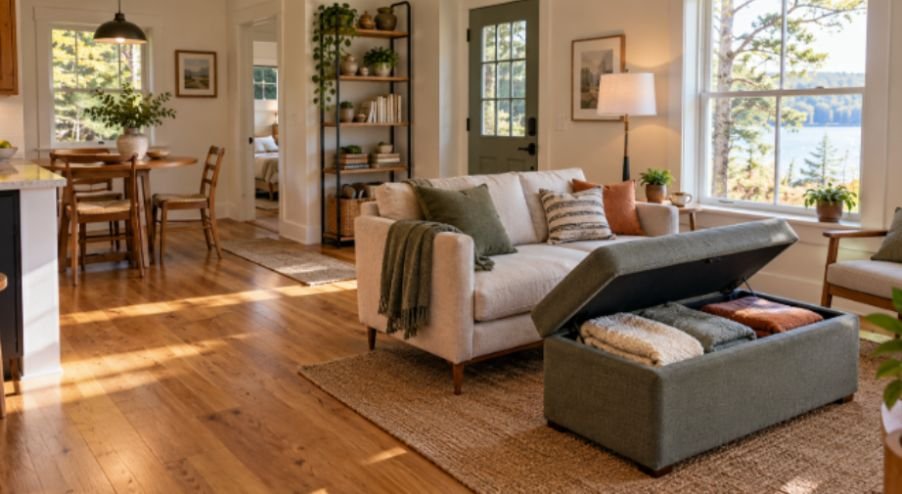
When floor space is scarce, build your storage upward. Floor-to-ceiling shelving, recessed medicine cabinets, and wall-mounted hanging rails clear flat surfaces completely.
Once your move is complete, maintain that balance by aligning daily habits with values. Protect your clear perimeter with a non-negotiable “One-In, One-Out” rule: whenever a new coat, kitchen skillet, or pair of shoes enters your front door, a corresponding item exits to charity that same day.
Frequently Asked Questions About Downsizing
1. What is the first thing you should get rid of when downsizing?
Start with obvious duplicates, expired products, and broken items in utility areas like the bathroom or pantry.
2. How much space do you really need to live comfortably?
Most individuals thrive in 400 to 700 square feet per person when rooms feature functional layouts and vertical storage.
3. How do I avoid regret when getting rid of personal possessions?
Photograph borderline items before parting with them; holding the visual memory removes the emotional sting of physical loss.
4. Does moving to a smaller home always save you money?
It saves significant money over time, provided initial moving and lease break expenses do not exceed your first-year savings.
Reclaiming Your Saturdays: The True Freedom of Less
Downsizing your home is not an exercise in squeezing your life into a matchbox; it is an eviction notice for everything consuming your time without paying rent. The point was never to see how few forks I could own. The point was spending Saturday mornings drinking hot coffee on my porch instead of vacuuming empty rooms and cleaning gutters.
Measure your most valued furniture today, run a quick holding-cost calculation on the clutter sitting in your garage, and pick one single drawer to clear out before sunset.