

Learning how to stop impulse buying without feeling deprived does not require banning every coffee, outfit, or spontaneous treat. It requires a spending system that gives pleasure a place while protecting your larger financial goals.
My approach is simple: I do not treat every want as a financial failure. I create enough distance between wanting something and paying for it to make a deliberate choice.
That small change turns shopping from an automatic reaction into a decision.
Why Strict Spending Bans Usually Backfire
A total ban can make spending feel emotionally charged. The more forbidden an item feels, the more attention it receives.
This creates a familiar cycle. You restrict yourself, feel frustrated, make an unplanned purchase, and then feel guilty. That guilt often leads to another harsh restriction.
Impulse buying research describes a conflict between immediate emotional rewards and the possible negative consequences of a purchase. Strong environmental and emotional cues can make the immediate reward feel more important.
That is why my method for how to stop impulse buying without feeling deprived begins with permission rather than punishment.
Quick Guide to Controlling Impulse Purchases
| Problem | Practical response | Why it helps |
| Shopping feels forbidden | Create a fun money allowance | Removes guilt and resentment |
| Online checkout is too easy | Delete saved payment details | Adds decision-making time |
| Sales create urgency | Wait at least 48 hours | Reduces pressure and excitement |
| Shopping improves your mood | Choose a free reward first | Separates emotions from spending |
| An item seems affordable | Convert its price into work hours | Reveals its personal cost |
| Your home feels cluttered | Apply one-in, one-out | Tests whether the item adds value |
Build a Guilt-Free Fun Money Buffer

A realistic budget should make room for enjoyment. I prefer setting a fixed monthly amount for optional, unplanned purchases.
For example, someone with a tight budget might reserve $40 each month. Someone with more disposable income might choose $100. The correct number is the amount you can spend without missing bills, reducing essential savings, or creating credit card debt.
Once that money is available, you can use it without guilt. When it runs out, new wants move to next month.
The Consumer Financial Protection Bureau recommends creating a workable plan when impulse spending is a known problem instead of relying on vague intentions. It also defines a budget as a plan for using income across expenses, savings, and other priorities.
This allowance matters because how to stop impulse buying without feeling deprived is easier when your plan includes controlled enjoyment.
Use Friction Instead of Willpower
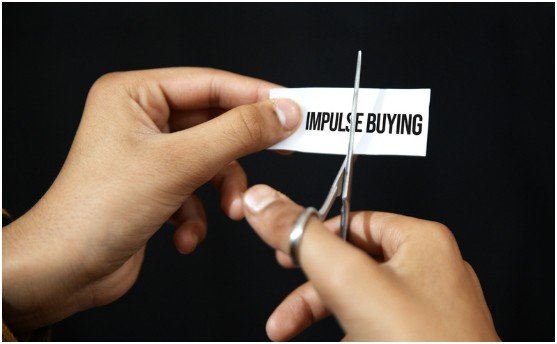
Willpower becomes weaker when you are tired, emotional, distracted, or rushed. Friction works even when your motivation is low.
Remove Shopping Triggers
Start by changing what appears around you.
Unsubscribe from retailer emails, disable promotional notifications, unfollow shopping-focused accounts, and remove retail apps from your home screen. The FTC confirms that consumers have the right to unsubscribe from commercial marketing emails.
You are not missing a bargain by avoiding constant promotions. You are preventing a company from creating a desire that did not exist five minutes earlier.
Be especially careful with countdown clocks, low-stock warnings, confusing buttons, and preselected options. The FTC has identified these types of “dark patterns” as tactics that can push consumers into choices they might not otherwise make.
Make Checkout Less Convenient
Delete saved card numbers from shopping sites and browsers. Turn off one-click purchasing. Log out after each order.
Requiring yourself to find a physical card creates a useful interruption. Research has also found that less tangible payment methods can reduce the immediate discomfort associated with paying and may weaken control over some impulsive purchases.
Friction is not punishment. It is a few extra seconds for your goals to catch up with your emotions.
Create a Want List and Wait 48 Hours

When I evaluate how to stop impulse buying without feeling deprived, the 48-hour rule does most of the heavy lifting.
Instead of adding an item to your cart, record it on a want list. Include the item, price, date, and reason you want it.
Do not research it repeatedly during the waiting period. Constantly watching reviews and price changes keeps the emotional excitement alive.
After 48 hours, ask whether you still want the product at its normal price. Limited-time pressure can encourage emotionally focused impulse buying, so waiting allows the urgency to weaken.
Use a longer waiting period for expensive purchases:
- Under $50: wait 48 hours.
- $50 to $200: wait seven days.
- Over $200: wait 30 days.
Try the Pause–Price–Place Test
I use three questions to judge whether an item deserves approval:
Pause: Would I still want this if the promotion ended?
Price: Can I pay for it without borrowing, delaying a bill, or reducing savings?
Place: Where will it physically fit, and what will it replace?
Consider a $120 jacket. It passes the pause test after seven days. However, you already own three similar jackets and cannot identify one to replace. The purchase fails the place test.
This method controls spending without automatically denying every desire.
Replace the Emotional Reward of Shopping
Sometimes you do not want the product. You want stimulation, comfort, distraction, or a sense of progress.
Before opening a shopping app, name what you feel. Try saying, “I am bored,” rather than, “I need something new.”
Then use a free replacement that matches the emotion. Take a brisk five-minute walk for restlessness. Play one energetic song when you need stimulation. Call someone when you feel disconnected. Complete a small household task when you want progress.
Wait ten minutes after the replacement activity. You can still reconsider the purchase later. The goal is not to suppress the urge. It is to discover whether shopping was solving the wrong problem.
This emotional swap is central to how to stop impulse buying without feeling deprived because it preserves the reward while changing the cost.
Change How You Measure an Item’s Cost
A price tag tells you what the retailer receives. It does not tell you what the purchase costs you personally.
Convert the Price Into Work Hours
Divide the total price, including tax and shipping, by your after-tax hourly income.
Suppose you bring home $20 per working hour. A $100 purchase costs five hours of labor. A $300 purchase represents 15 hours.
Then ask: “Would I exchange that amount of my time for this item?”
The answer may still be yes. The calculation simply makes the trade visible.
Real-time feedback can support better spending decisions. In CFPB research, more than 90% of participating consumers expressed interest in tools that provide immediate spending feedback, and many believed such tools could help curb impulse spending.
Use the One-In, One-Out Rule
For every nonessential item entering your home, choose a similar item to donate, sell, or discard.
A new pair of shoes replaces an old pair. A kitchen gadget replaces one you no longer use. A decorative item must earn space by displacing another.
This rule exposes purchases based on novelty. When the new item is not better than anything you own, it probably does not deserve your money or storage space.
When Impulse Spending Needs Extra Support
Occasional unplanned purchases are common. A deeper problem may exist when shopping causes debt, secrecy, missed bills, relationship conflict, or repeated distress.
In that situation, budgeting tips alone may not address the underlying behavior. Consider speaking with a qualified mental health professional or a nonprofit credit counselor.
The goal is not to attach shame to spending. It is to get suitable support before the financial and emotional consequences become harder to manage.
Frequently Asked Questions
1. How can I stop impulse buying online?
Remove shopping apps, delete saved cards, block promotional alerts, and place every nonessential purchase on a 48-hour want list.
2. How do I control shopping urges without a no-spend challenge?
Use a monthly fun money allowance so you can enjoy optional purchases within a clear, affordable limit.
3. What is the best rule for avoiding impulse purchases?
A 48-hour waiting rule works well for small purchases, while expensive items should receive a seven-day or 30-day pause.
4. How to stop impulse buying without feeling deprived on a tight budget?
Reserve a small guilt-free amount, reduce shopping triggers, and replace emotional shopping with free rewards before spending.
Your Cart Is Not the Boss of You
Knowing how to stop impulse buying without feeling deprived means replacing extreme restriction with planned permission, useful friction, and honest self-awareness.
Start with one change today. Delete your saved payment information or create a 48-hour want list. That single pause can protect your budget without turning life into an endless punishment.
You are allowed to enjoy your money. Your cart simply does not get to make the decision for you.