

An unpaid invoice is more than an inconvenience. It can force a profitable small business to delay payroll, postpone expenses, or borrow money to cover work already completed.
Understanding how to deal with late paying clients begins with a simple principle: pursue payment promptly without turning every overdue invoice into a confrontation.
A professional reminder, a clear payment deadline, and a documented escalation process can recover money while preserving valuable relationships. The challenge is knowing when to remain flexible and when to establish firmer boundaries.
What to Do When a Client Misses a Payment Deadline
The first response should be organized rather than emotional. Before contacting the customer, confirm the invoice amount, due date, billing address, and agreed payment terms.
Send a Friendly Reminder Immediately
Contact the client within one or two business days after the deadline.
Keep the message short and professional. Mention the invoice number, outstanding balance, original due date, and payment link.
For example:
Hi Sarah, I noticed invoice #1042 for $850 was due on October 15 and remains outstanding. I’ve attached another copy for convenience. Could you confirm when payment is scheduled?
This approach assumes an administrative oversight rather than deliberate avoidance.
Request a Specific Payment Commitment
If the first reminder receives no response, follow up after several business days.
Avoid vague requests such as asking whether the customer received the invoice. Instead, request confirmation of a specific payment date.
A definite commitment creates accountability and establishes a useful written record.
Contact the Person Responsible for Payments
Your project contact might not control financial approvals.
Ask for the accounts payable department or billing manager. Confirm whether the invoice requires a purchase order, vendor registration, tax form, or additional approval.
The nonprofit organization SCORE recommends identifying customers’ billing requirements early to prevent avoidable delays.
A Practical Four-Stage Invoice Collection Timeline
Business owners searching for how to deal with late paying clients need a repeatable system rather than a different strategy for every customer.
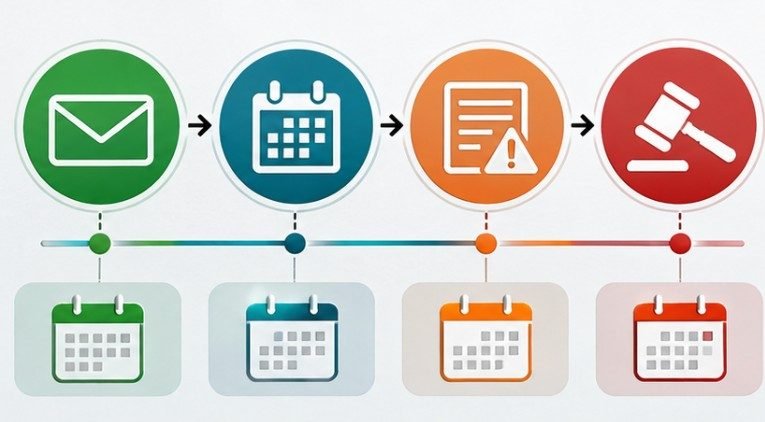
Use this schedule as a starting point, adjusting it to your agreement and circumstances.
Stage 1: Days 1–3 — Confirm the Overdue Balance
Send a courteous reminder with the original invoice attached.
Verify that the client has received the document and understands the payment deadline.
Stage 2: Days 7–14 — Secure a Payment Date
Follow up by telephone or email.
Ask when payment will be processed, and request written confirmation. If the client identifies a billing problem, resolve it promptly.
Stage 3: Days 15–30 — Establish Clear Boundaries
Send a firmer notice referring to the agreed payment terms.
Explain that additional work may be paused if the contract permits it. Apply late fees only when authorized by the agreement and applicable law.
A 5% monthly late charge, for example, should never be treated as automatically enforceable.
Stage 4: Beyond 30 Days — Consider Formal Recovery
If reminders fail, send a final written demand specifying the amount due, a reasonable payment deadline, and the next action you intend to take.
For unresolved accounts, consider mediation, a commercial collection agency, or legal proceedings.
Do not automatically wait 90 days if the client’s conduct suggests the debt is at risk.
When Should You Stop Working for an Unpaid Client?

Continuing to deliver services without payment increases your financial exposure.
If the agreement permits suspension, notify the client in writing before stopping work. Identify which services will be affected and what payment is required to resume.
However, abruptly withdrawing from essential services or abandoning contractual obligations can create legal problems.
The American Bar Association discusses structured billing procedures and clearly defined escalation policies for overdue accounts.
For independent contractors, a similar approach helps separate payment disputes from emotional decisions.
How to Prevent Late Payments Before Projects Begin
Successful collections start before the first invoice is issued.
Require Deposits and Milestone Payments
For project-based work, consider requesting 30%–50% upfront.
Divide larger projects into milestones, with payment required at agreed stages. This prevents the entire project value from remaining outstanding until completion.
Write Clear Payment Terms
Your contract should specify invoice due dates, accepted payment methods, late-payment provisions, dispute procedures, and conditions for suspending services.
Terms such as Net 15 or Net 30 should also include an actual calendar due date on each invoice.
Make Paying Convenient
Accept practical payment options such as ACH transfers, credit cards, PayPal, or secure payment links.
Automated reminders through QuickBooks, FreshBooks, or Xero can reduce the administrative burden.
Maintain a dedicated business bank account and learn how to separate business and personal expenses correctly to track outstanding income accurately.
When Late Payments Require Legal Action

Small claims court can be appropriate when the outstanding amount justifies the effort and falls within applicable jurisdictional limits.
Requirements differ by state, including filing limits, eligible business entities, filing deadlines, and required notices.
The New York State Courts’ Small Claims Handbook explains how certain business-related payment disputes may qualify for commercial small claims proceedings.
Before filing, preserve your signed agreement, invoices, delivery records, payment reminders, and correspondence.
Remember that winning a judgment does not guarantee immediate collection.
Federal consumer debt collection protections also differ from rules governing commercial debts. The Consumer Financial Protection Bureau explains that the federal Fair Debt Collection Practices Act generally does not cover business debts, although other laws may apply.
Protect Your Cash Flow When Payment Is Delayed
Late invoices become especially dangerous when businesses spend expected revenue before receiving it.
Review outstanding invoices weekly and identify customers who regularly exceed agreed payment terms.
Consider an aging report that separates unpaid invoices into current, 1–30 days overdue, 31–60 days, and more than 60 days.
Track the percentage of invoices paid on time and avoid relying excessively on a single customer.
During temporary cash shortages, practical spending boundaries can help. The principles behind creating low-buy rules that work can also inform decisions about postponing nonessential business purchases.
For persistently unreliable customers, consider upfront payment, shorter terms, or ending the relationship after contractual obligations are satisfied.
Frequently Asked Questions
1. How many reminders should I send before taking action?
A reasonable starting point is two or three reminders, followed by a formal notice. Adjust the schedule based on the invoice amount, contract, client history, and response.
2. Can I charge interest on overdue invoices?
Potentially, if your agreement and applicable state law permit it. Review contractual terms and legal limits before adding interest or penalties.
3. Should I offer a payment plan to a struggling client?
A written payment plan may recover more money than immediate confrontation. Specify installment amounts, due dates, and consequences of missed payments.
4. What if a client refuses to pay for completed work?
Collect evidence of the agreement and completed deliverables. Address any legitimate dispute, send a formal demand, and evaluate mediation or legal recovery options.
Make Getting Paid Part of Your Business Process
Learning how to deal with late paying clients is ultimately about creating predictable boundaries rather than becoming aggressive.
A missed deadline deserves attention, but not every delay deserves confrontation. Start with clear communication, document every commitment, and escalate only when necessary.
For future projects, deposits, written agreements, convenient payment methods, and automated reminders can reduce the likelihood of repeated problems.
Most importantly, distinguish customers experiencing temporary difficulties from those consistently disregarding your terms.
Your work has financial value. Protecting that value should be a routine business responsibility, not an uncomfortable conversation you continually postpone.